Sod installation: when and how in the Tulsa area
Lay Bermuda sod from May through July, at least a month before the November 3 average first frost. Tall fescue sod goes down September through May.
· Tulsa, Jenks, Bixby, Glenpool, Sapulpa, Sand Springs
The short answer
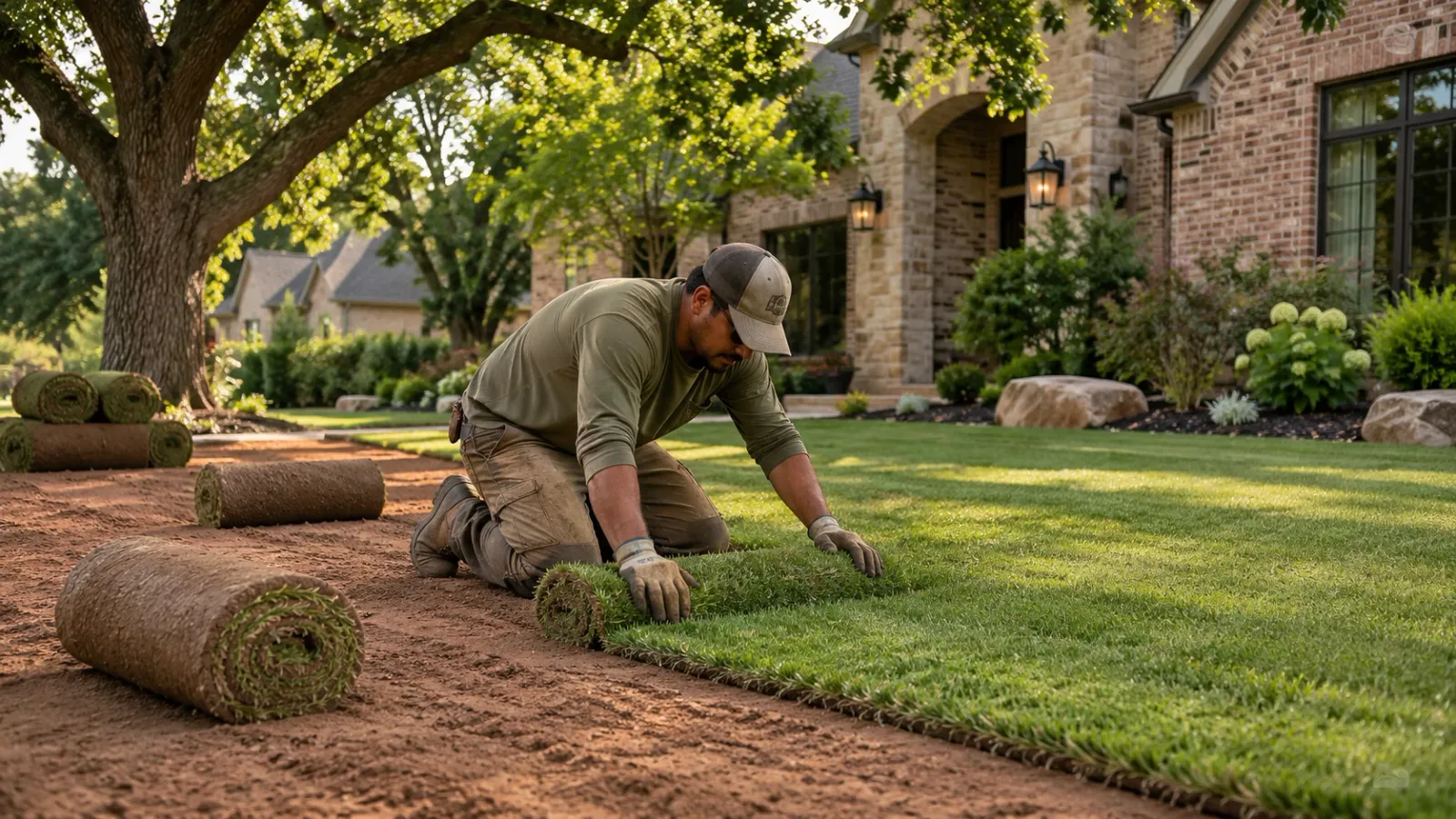
Lay Bermuda sod in the Tulsa area from May through July. Oklahoma State University Extension lists May to July as the planting window for Bermuda sod, and says to sod warm-season grasses at least one month before the first fall frost so the roots have time to take hold. Tulsa's average first frost is November 3, according to the National Weather Service, so early October is the last safe point in an average year.
If you're reading this in November, a Bermuda lawn will have to wait for spring. Tall fescue is the exception: OSU's table lists September through May for fescue sod, and fescue is the grass for the shaded yards where Bermuda won't grow.
Pick the grass before the date
The grass decides the calendar. OSU's planting table for Oklahoma lawns breaks down like this:
- Bermuda (sodded varieties such as Tifway and Midiron): May through July.
- Zoysia: May through July.
- St. Augustine: May only.
- Tall fescue: sod September through May.
Shade settles most of it. OSU's grass selection guide says warm-season grasses can't tolerate shaded sites, and points to a cool-season grass such as tall fescue for those spots. It notes zoysia handles light shade, while Oklahoma's hot, dry summers limit cool-season grasses to shaded areas and yards with irrigation. A yard with a sunny front and a shaded back may end up with two grasses.
Prepare the soil first
OSU says soil preparation is the same whether you seed or sod. The University of Maryland lists four common reasons new sod struggles: sod that dried out before planting, poor soil preparation, not rolling it, and not watering enough afterward.
OSU's steps, in order:
- Measure the area in square feet so you order the right amount of sod and fertilizer.
- Test the soil about two months ahead. Take 10 to 15 cores 3 to 4 inches deep across the lawn, mix them, and take a pint to your county Extension office.
- Kill perennial weeds before you dig. OSU calls naturalized Bermuda the greatest weed problem in Oklahoma, which matters when a different grass is going in.
- Clear debris such as rock, wood, pipe and stumps.
- Loosen the soil 8 to 10 inches deep if you can, and at least 4 to 6 inches.
- Improve tight clay. OSU says it takes at least 4 to 6 inches of loamy topsoil or coarse sand mixed into the top 2 to 4 inches of clay. Mix it in; don't just layer it on top.
- Put in drains and sprinkler lines before the final grade. OSU puts turf sprinkler laterals 12 inches deep.
- Grade for drainage. OSU calls for at least a 1 percent slope away from buildings. If water already pools in the yard, fix that now. Our guides on water pooling in the yard and French drains vs. regrading cover the options.
- Firm the surface. You should be able to walk on it with footprints no deeper than half an inch.
- Wet the soil 5 to 6 inches deep several days before the sod arrives. OSU says never to lay sod on dry soil.
- Spread a starter fertilizer just before or after planting, at 1 to 2 pounds of nitrogen per 1,000 square feet, per OSU.
How to lay it
OSU's method: start along a straight edge such as a driveway or sidewalk and work toward the middle. Lay the pieces in a staggered pattern, like brick, and fit them snugly so the edges don't dry out. Don't tuck edges or ends under the next piece.
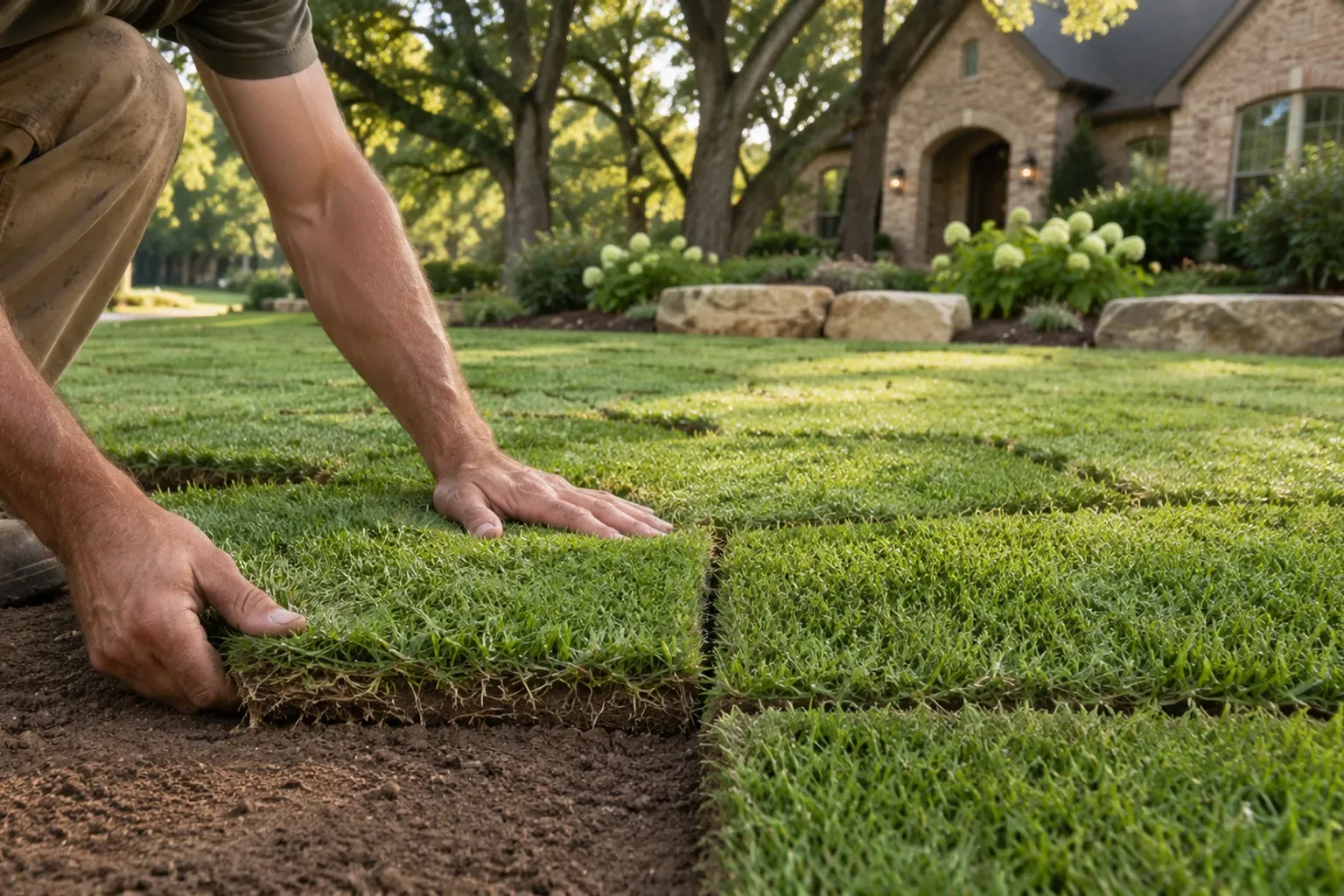
Roll or tamp the sod right after laying it so the roots touch the soil, and water immediately. On a big lawn, OSU suggests laying and watering one section at a time instead of waiting until the whole yard is down.
Watering and the first month
OSU says to water daily for several weeks after planting, keeping the top 1 to 2 inches of soil moist until the grass roots in. Maryland adds that each watering should soak through the sod into the soil below it. Once the grass is rooted, switch to deeper, less frequent watering to push roots down, but OSU warns never to let new turf dry out.
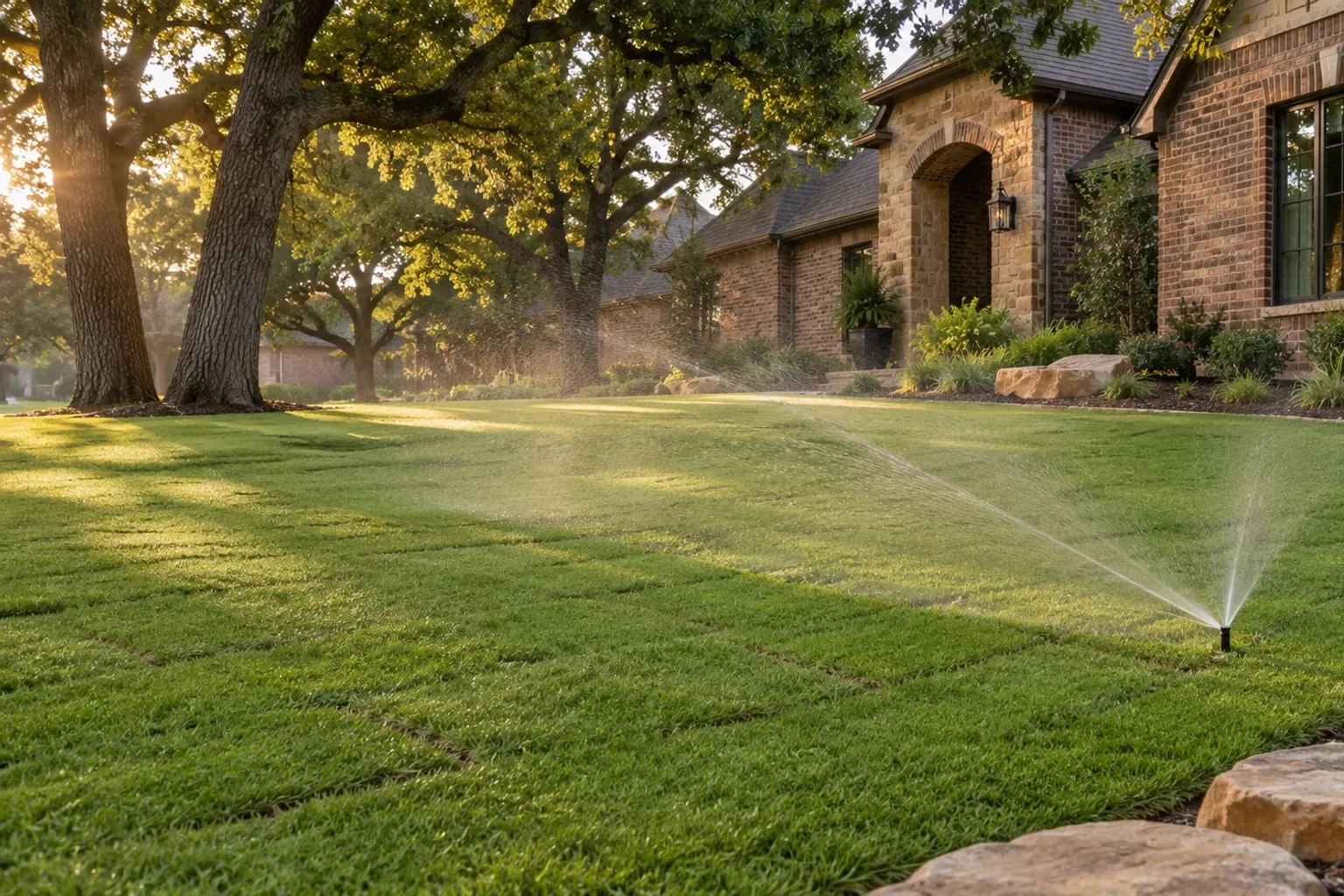
Maryland says actively growing sod should root in two to three weeks. To check, pull gently on a corner. If it lifts easily, it hasn't rooted yet and can still dry out.
The rest of the first month, according to OSU:
- Fertilize three to four weeks after planting, with about half a pound of nitrogen per 1,000 square feet.
- Mow as soon as the grass reaches its normal cutting height. Mowing promptly helps it spread and root. Our guide on mowing Bermuda in summer covers heights.
- Hold off on weed killer for at least three to four weeks. Pull weeds by hand in small areas. OSU says 2,4-D isn't safe on new Bermuda at normal rates.
Watering during a shortage
Summer sod and summer water limits can collide. In Sand Springs, a Stage Two water shortage limits outdoor watering to every fifth day by address. The city code lets commercial landscaping companies get a permit from the City Clerk to water a new installation during the work and for 10 days after it's finished. If you're laying sod in a dry summer, check your city's current stage before the pallets arrive.
What it costs
Iron Oak doesn't publish sod prices. LawnStarter's 2026 cost guide, updated October 5, 2026, puts national averages at $0.44 to $0.83 per square foot for Bermuda sod alone and $1.01 to $1.76 per square foot installed. It lists ground preparation separately: $0.88 to $1.84 per square foot to remove weeds and old grass, and $0.90 to $2 per square foot to till and grade. Those are national averages, not Tulsa quotes. LawnStarter says the real cost depends on lawn size, sod type, soil preparation and location.
Common questions
Can you lay sod in November in Oklahoma?
Not Bermuda. OSU says to sod warm-season grasses at least a month before the first fall frost, and Tulsa's average first frost is November 3. Tall fescue sod is listed for September through May, so a shaded fescue lawn can still go in.
Can you lay sod on top of existing grass?
Not by OSU's method. Its steps start with killing perennial weeds, clearing debris and loosening the soil 4 to 10 inches deep, none of which can happen under an existing lawn. Maryland lists poor soil preparation as one of the main reasons new sod fails.
How long before you can walk on new sod?
The sources don't give a day count. Maryland says sod should root in two to three weeks, and a gentle tug on a corner tells you whether it has. Until it holds, the pieces can lift and dry out.
How often should you water new sod?
Daily for several weeks, according to OSU, keeping the top 1 to 2 inches of soil moist. Once it roots, water deeper and less often.
Will Bermuda sod grow in the shade?
Not well. OSU says warm-season grasses can't tolerate shaded sites. Use tall fescue in shade, or zoysia where the shade is light.
Help with a new lawn
A new lawn often starts with grade and drainage. If water collects near the house or in the yard, our drainage work covers that first. Once the grass is in, our lawn care plans handle mowing, edging and seasonal cleanup in Jenks, Bixby, Glenpool, Sand Springs and Sapulpa. Sod installation isn't on those lists, so mention it when you ask for a quote and we'll tell you what we can do.
Sources: Oklahoma State University Extension, Establishing a Lawn in Oklahoma (HLA-6419, PDF) · Oklahoma State University Extension, Selecting a Lawn Grass for Oklahoma (HLA-6418, PDF) · National Weather Service Tulsa, frost and freeze climatology · University of Maryland Extension, Sod Problems in Lawns · City of Sand Springs, Title 13 (PDF): water shortages · LawnStarter, How Much Does Sod Cost in 2026? (third-party price ranges)