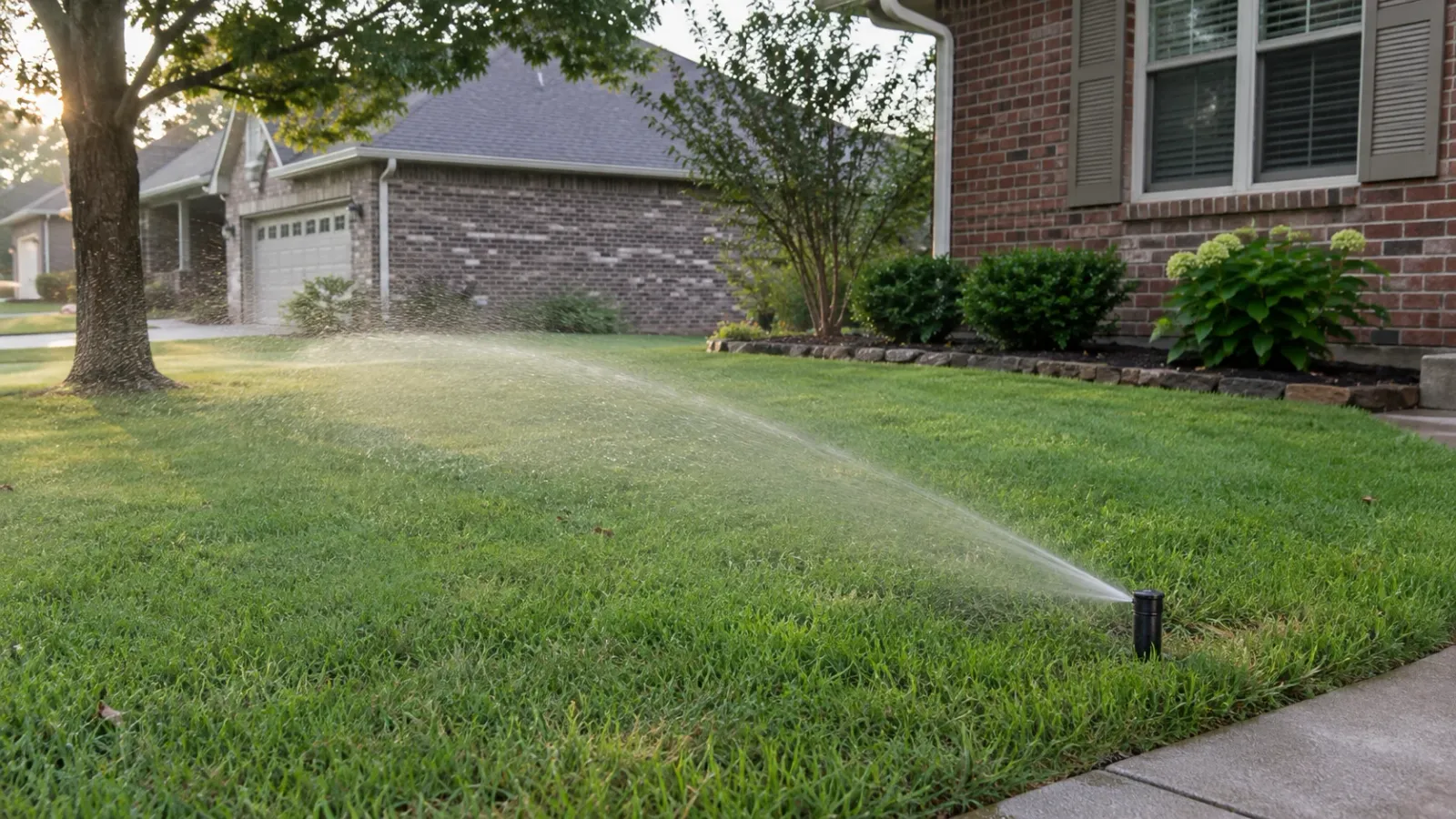
Catch basins: what they are and when a yard needs one
A catch basin is a buried box with a grate that catches surface water at a low spot or downspout and pipes it away. Use one where water pools on top.
· Tulsa, Jenks, Bixby, Glenpool, Sapulpa, Sand Springs
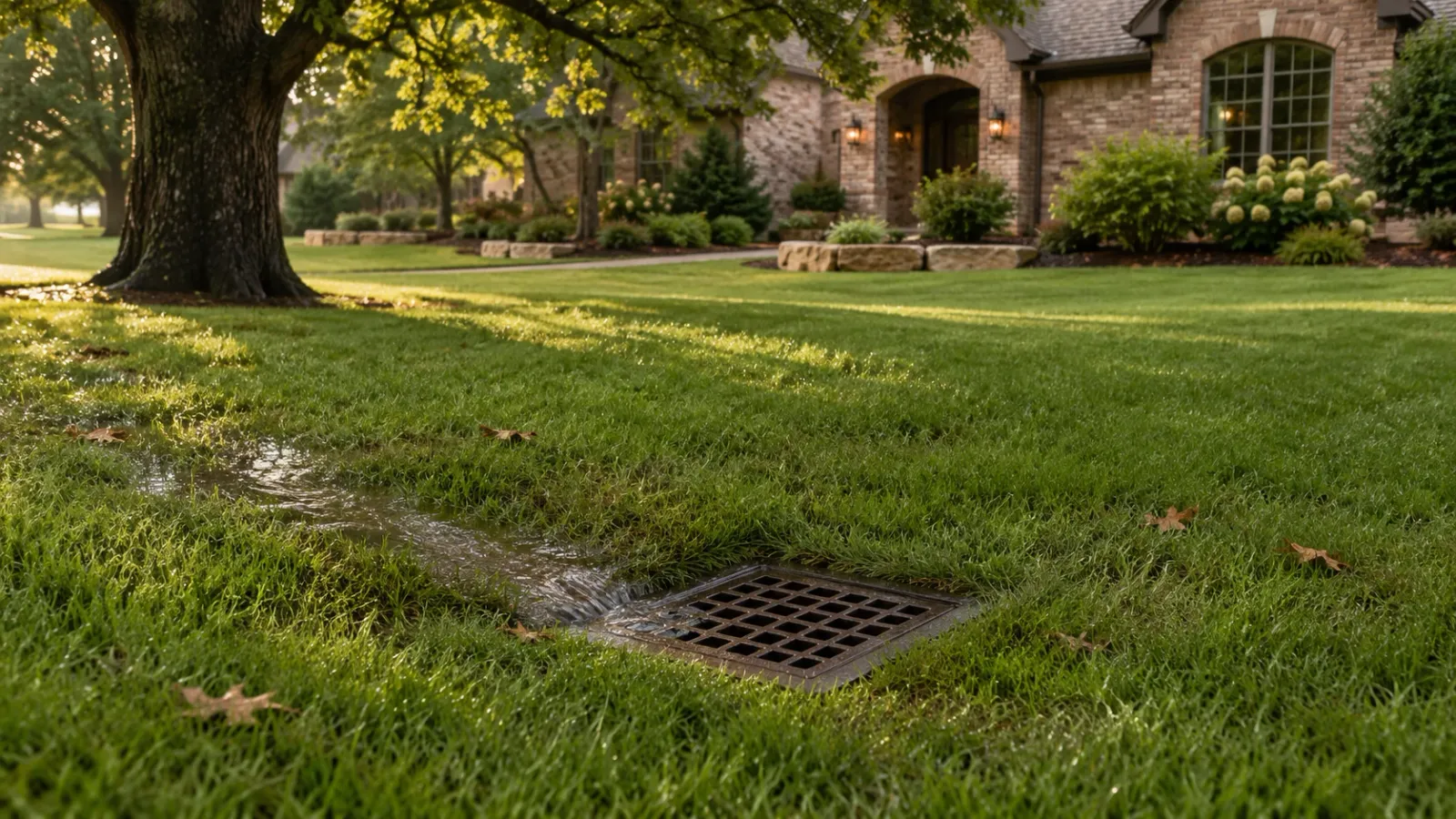
The short answer
A catch basin is a buried plastic or concrete box with a grate on top, set at the spot where water collects. Rain runs into the grate, drops into the box, and leaves through a solid pipe to somewhere it can do no harm: downhill, the street, or a dry well.
A yard needs one when water pools on the surface at a low spot that grading can't fix, or when a downspout dumps roof water where it has nowhere to go. Oklahoma State University Extension says that if water is ponding and the grass is dying, the fix may be better grading or a surface drain with a pipe that carries the water to the road or another exit that doesn't affect the neighbors. A catch basin is that surface drain.
How a catch basin works
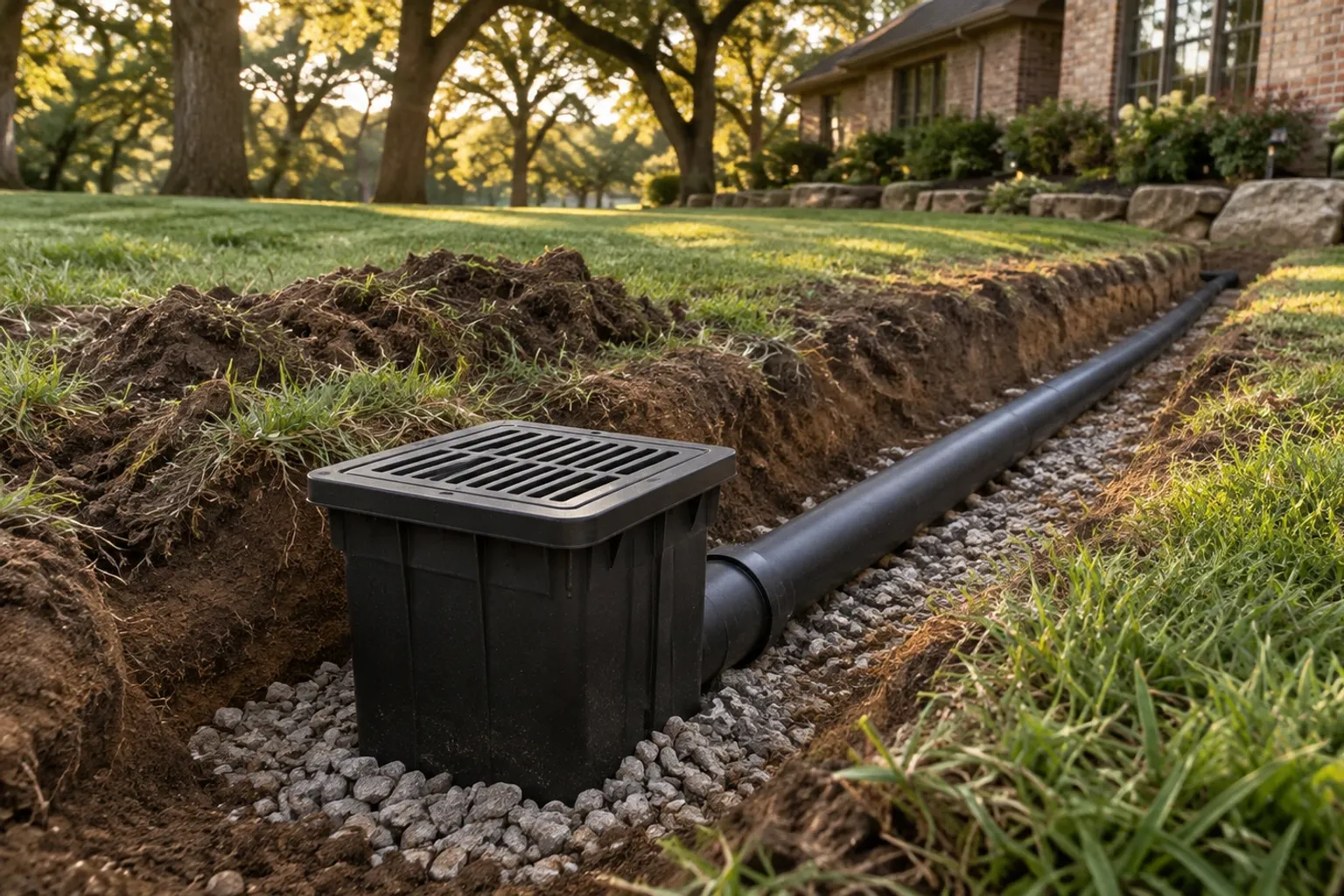
The box sits in the ground with its grate at the surface. NDS, a drainage manufacturer, describes it as a box that sits where water naturally collects and carries the water away through connected pipes. NDS says a sump built into the bottom collects sediment and debris, and it can be cleaned out.
NDS sells basins in 6, 9, 12 and 18 inch sizes and says a 12 inch basin suits most homes. It names 4 inch PVC as the standard pipe for residential work.
For a basin in a lawn, the NDS instruction sheet calls for:
- A gravel base. At least 4 inches of compacted gravel under the box.
- The grate just below the grass. About 1/4 inch below the finished grade around it, so water runs in instead of around it.
- Pipe that falls the whole way. NDS says the trench should slope at least 1% away from the house, about 1 inch of drop for every 8 feet of pipe.
- Cover over the pipe. NDS calls for 12 to 18 inches of soil over the pipe at minimum.
When a yard needs one
A catch basin handles water on top of the ground. It fits four common problems.
- A low spot that holds water after rain. NDS lists the lowest points in the yard and the base of slopes as the first places to put a basin.
- A downspout with nowhere to go. OSU Extension says downspouts can be fixed with drains, meaning inlets that carry the water downslope. NDS's downspout instructions put the basin right under the downspout.
- Runoff from the neighbors. NDS says catch basins can handle water running in from neighboring property. In Tulsa, that water has to keep moving: the city's residential guidelines say a property can't block water flowing onto it and must pass it along without damaging the neighbors.
- Water off a patio or driveway. NDS says linear channel drains can feed into catch basins on large paved areas. On paving, the instruction sheet sets the grate about 1/8 inch below the surface where people walk.
NDS says one basin may not be enough when the area draining to it is larger than 2,500 square feet.
When it isn't the right fix
A catch basin only catches what reaches the grate. If the ground stays squishy days after rain, or water seeps up from below, the problem is under the surface. OSU Extension says that calls for improved drainage below ground, such as a French drain or a perforated pipe in gravel, with its own outlet. Our guide to French drains vs. regrading covers that choice.
A basin also can't fix a yard that slopes toward the house. Reshaping the ground comes first, and why water pools in a yard explains the grade the code asks for.
Where the water goes
Every basin needs an outlet lower than the grate. OSU Extension lists three: a pipe that comes back to the surface downhill, a dry well, or a sump pump where the yard is too flat for gravity. NDS's pop-up emitter is one way to end the pipe at the surface downhill, and NDS says it has to sit lower than the point where water enters the system.
OSU says it's common in Tulsa to send downspout water onto driveways, sidewalks and streets, and Tulsa's residential guidelines say extra water from a property should go to the street where possible or to another approved drainage path. NDS says a basin can connect to a city storm system only where that's permitted, so ask the city before you tie into a curb or storm inlet. Tulsa also applies its grading and drainage plan requirement to excavating and regrading, not only new building.
Two more limits from OSU's downspout guide: don't send drain water over a septic system or drain field, and don't discharge it toward a neighbor's lot.
Keeping it working
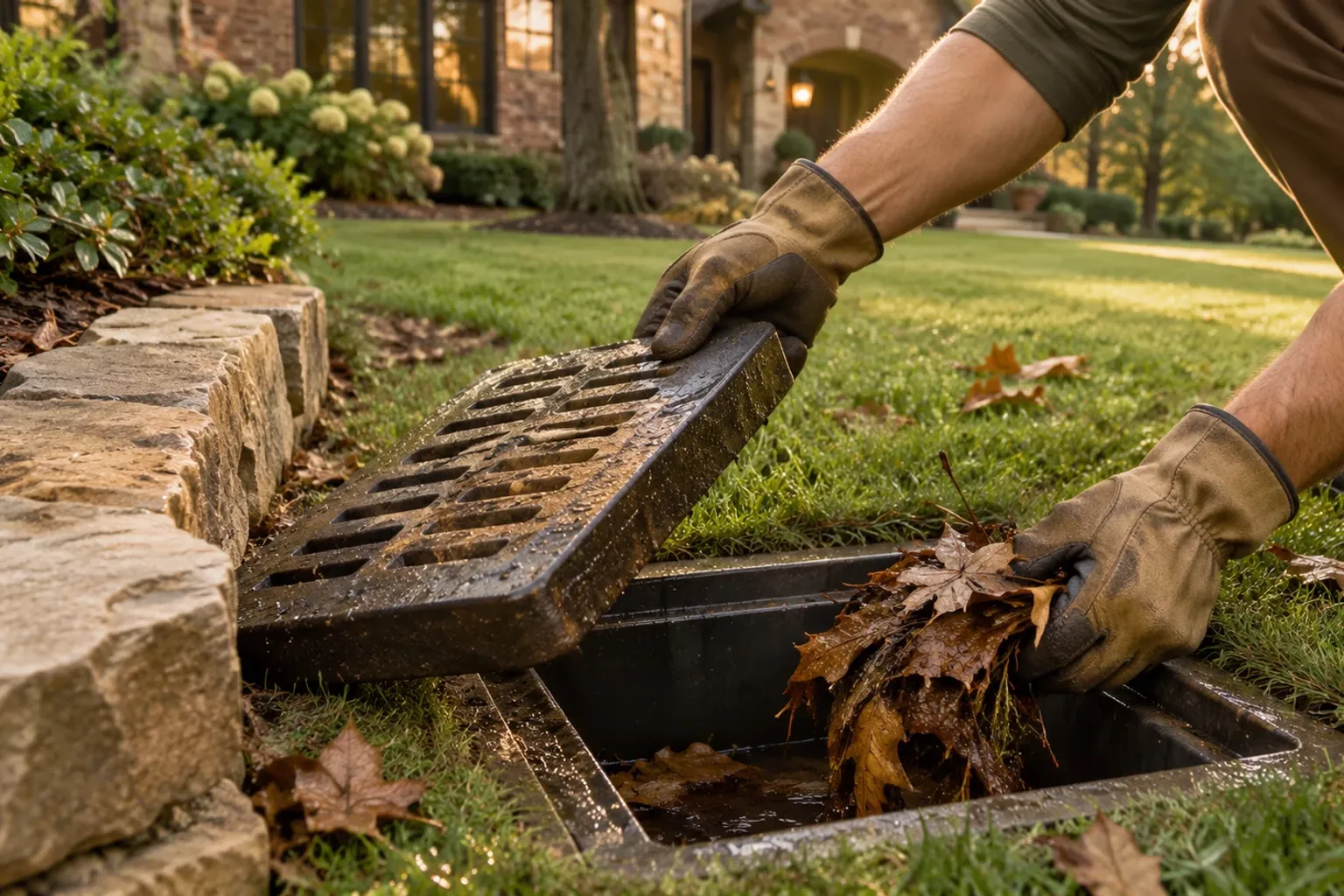
A clogged basin floods the spot it was meant to drain. NDS recommends:
- Look over the grate and basin monthly.
- Lift the grate and clean out the sump at least twice a year.
- Check the pipe once a year.
- Add a basin filter where the runoff carries a lot of sediment or debris.
The instruction sheet also points to weep-hole knockouts in the basin that let it drain completely after a storm, which stops water from sitting and breeding mosquitoes. OSU makes the same point about every drain: soil works its way in over time, so plan for cleanout from the start.
Common questions
What is the difference between a catch basin and a French drain?
A catch basin collects water off the surface through a grate and moves it in a solid pipe. A French drain is a gravel trench that collects water soaking through the soil. Surface pooling calls for a basin; ground that stays soggy calls for a French drain. Some yards need both.
How deep does a catch basin go?
Deep enough for a 4 inch gravel base under the box and 12 to 18 inches of soil over the pipe, according to NDS. The pipe then needs to fall at least 1% all the way to its outlet.
Can a catch basin drain into the street?
Often, yes. Tulsa's residential guidelines say extra water should go to the street where possible. Tying into a curb or a city storm sewer is a different matter, and NDS says to do that only where it's permitted, so check with your city first.
How often should a catch basin be cleaned?
NDS says to check the grate monthly, clean out the sump at least twice a year, and inspect the pipe once a year.
Do I need to call 811 before installing one?
Yes. OKIE811 says homeowners must contact it at least three business days before digging, and locating buried lines is free.
Getting water out of a low spot
Our drainage work starts with where water collects and where it can safely discharge, and the fix may include grading, a French drain or catch basins, with the outlet and materials explained in the quote. We work in Jenks, Bixby, Glenpool, Sand Springs and Sapulpa. See how we handle drainage or send us photos of where the water sits.
Sources: Oklahoma State University Extension, BAE-1542: Addressing Drainage Issues in the Urban Landscape (PDF, July 2020) · Oklahoma State University Extension, BAE-1534: Minimizing Stormwater Runoff by Disconnecting Residential Downspouts (PDF, May 2017) · NDS, How to install a catch basin · NDS, Square catch basin instruction guide (PDF) · NDS, Downspout runoff installation instructions · City of Tulsa, Residential Building Guidelines (PDF, January 2025) · OKIE811, Homeowners