Spring cleanup checklist for Tulsa yards
Cut back grasses and put down crabgrass preemergent by mid-March, start sprinklers and refresh mulch after the March 29 average last frost, feed Bermuda in May.
· Tulsa, Jenks, Bixby, Glenpool, Sapulpa, Sand Springs
The short answer
Work in three rounds, timed to Tulsa's frost dates. Late February to mid-March: put down crabgrass preemergent, cut back ornamental grasses and liriope, prune roses and summer-flowering shrubs, and rake out the beds. After the last frost: start the sprinkler system, scalp the Bermuda if you want, divide perennials and refresh mulch. Late April into May: cut out winter-damaged wood, feed the Bermuda once it's fully green, and plant summer color.
The National Weather Service puts Tulsa's average last 32-degree night on March 29 and the average last 28-degree hard freeze on March 17. Frost has come as late as May 2 (1909), so check the 10-day forecast before you do anything that a cold snap would punish.
Round 1: late February to mid-March
The lawn is still brown and most shrubs haven't leafed out. That makes it the easiest time to see what you're cutting.
Put down crabgrass preemergent
Oklahoma State University Extension's landscape maintenance schedule says to apply the first preemergent for summer annual weeds to turf from January to mid-March. It has to go down before the seeds sprout, so this one belongs at the top of the list. The same schedule lists preemergents labeled for shrub borders and perennial beds in February.
Cut back ornamental grasses and liriope
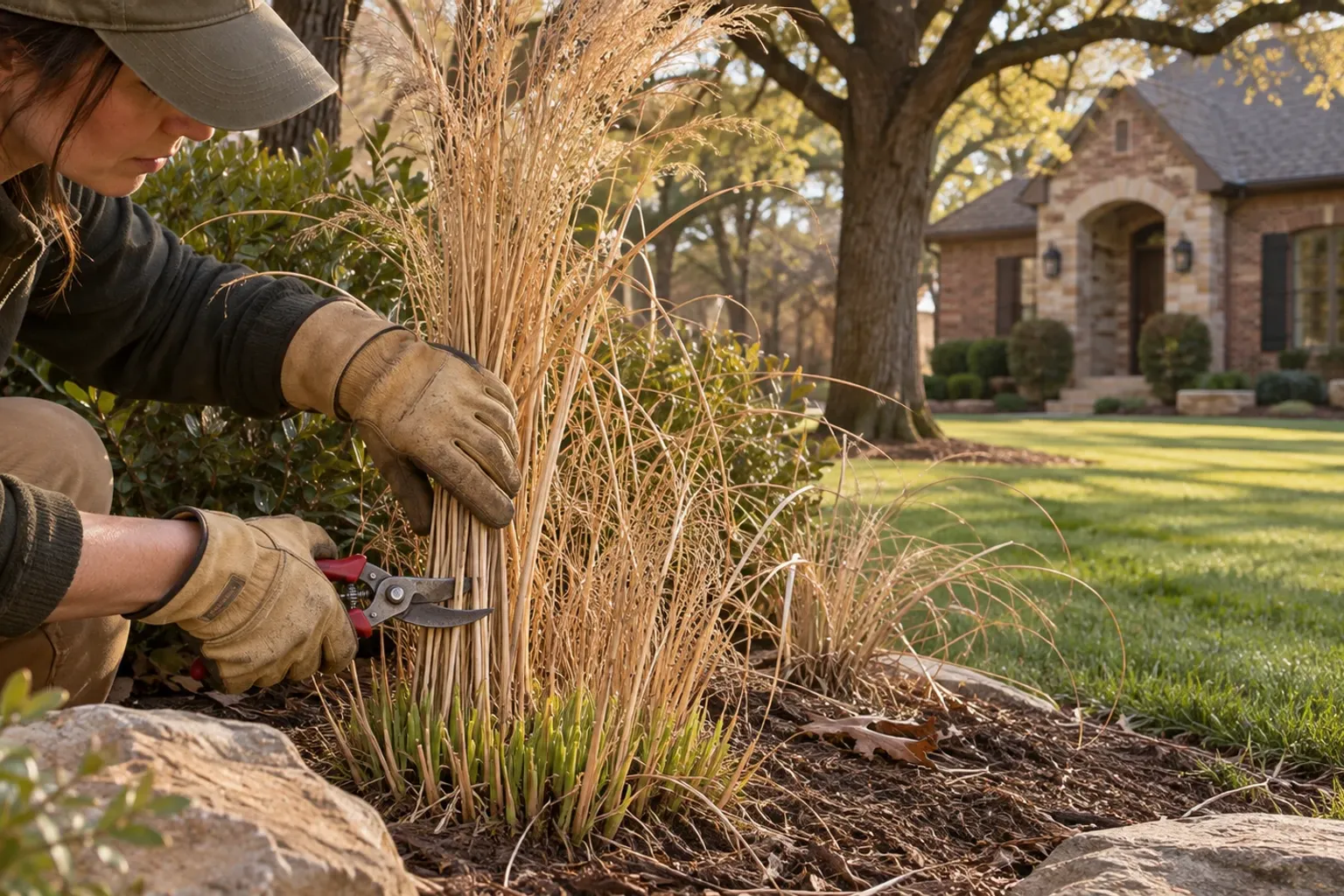
OSU Extension says to cut ornamental grasses back in late winter or early spring, just before new growth begins. Its March horticulture tips give the heights: about 2 to 3 inches from the ground for small grasses and 6 to 8 inches for large ones. Mexican feather grass is the exception; take off only a third to half its height.
Hedge shears handle a few clumps, and OSU suggests electric hedge trimmers for more. Many grasses have serrated leaf edges, so wear gloves. The schedule also says to mow or cut back old liriope (monkey grass) foliage in March. The trimmings can go in the compost pile or be used as straw mulch.
Prune the right shrubs, and leave the rest
Timing matters more than technique here. OSU Extension's February 2026 pruning advice:
- Summer bloomers such as rose-of-Sharon, butterfly bush and glossy abelia flower on new growth. Prune them in early spring.
- Spring bloomers such as forsythia, flowering quince, viburnum, crabapple and wisteria have already set their buds. Leave them until the flowers fade, or you cut off this year's bloom.
- Shade trees and hedges: the maintenance schedule says to finish pruning them in February.
- Roses: OSU says to prune about 3 to 4 weeks before the average last killing frost, which in most of Oklahoma is around March 15. Climbing roses wait until after they flower.
Wrong timing usually won't kill a plant, OSU notes, but it can weaken it. Keep the blades sharp and clean them after use.
Clear the beds
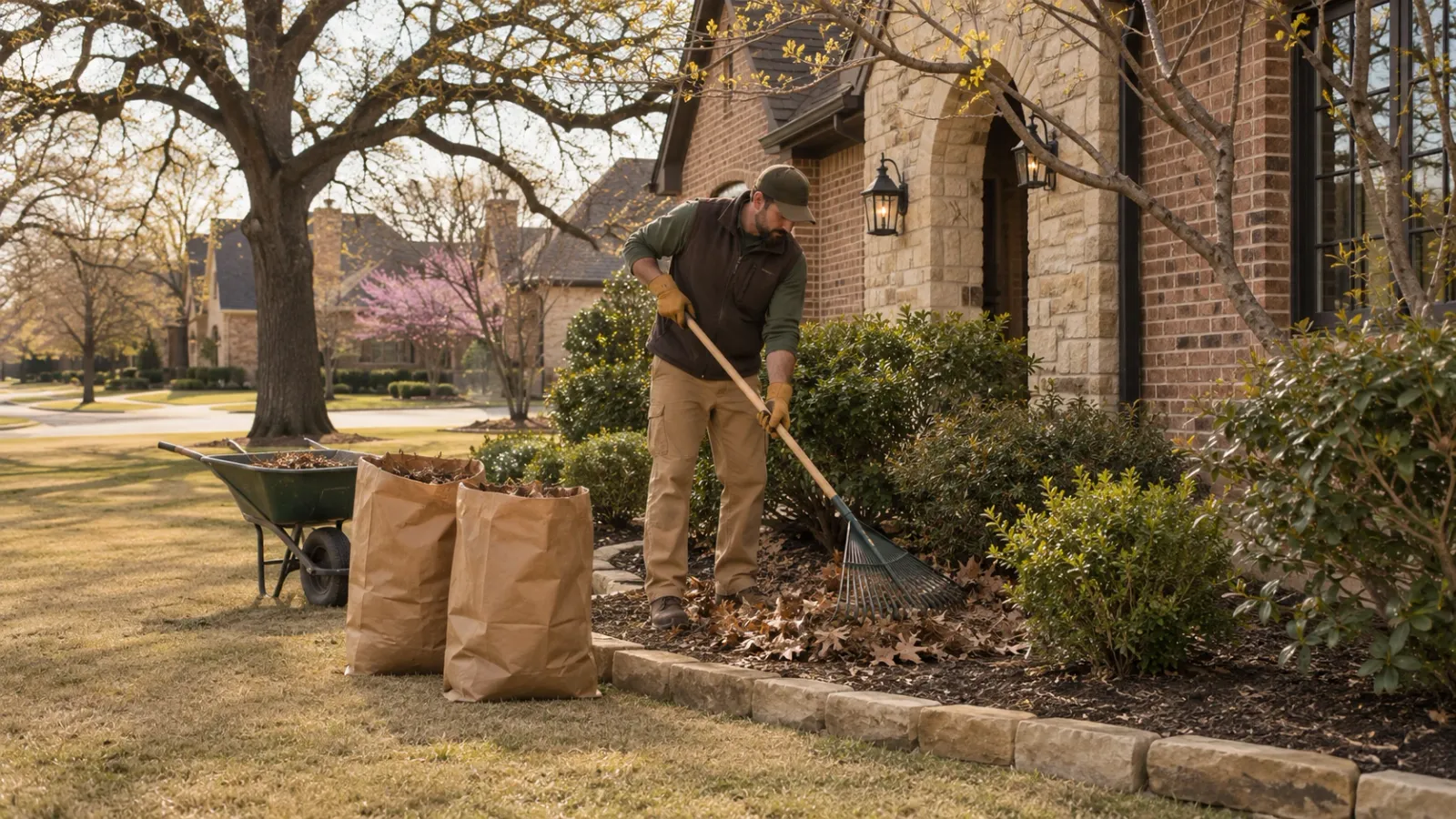
Rake out the leaves and sticks that collected over winter. OSU's spring advice for beds is short: remove all debris and get weeds under control before planting. Our fall leaf cleanup guide covers why a leaf mat left on grass does damage.
Round 2: after the last frost (late March to April)
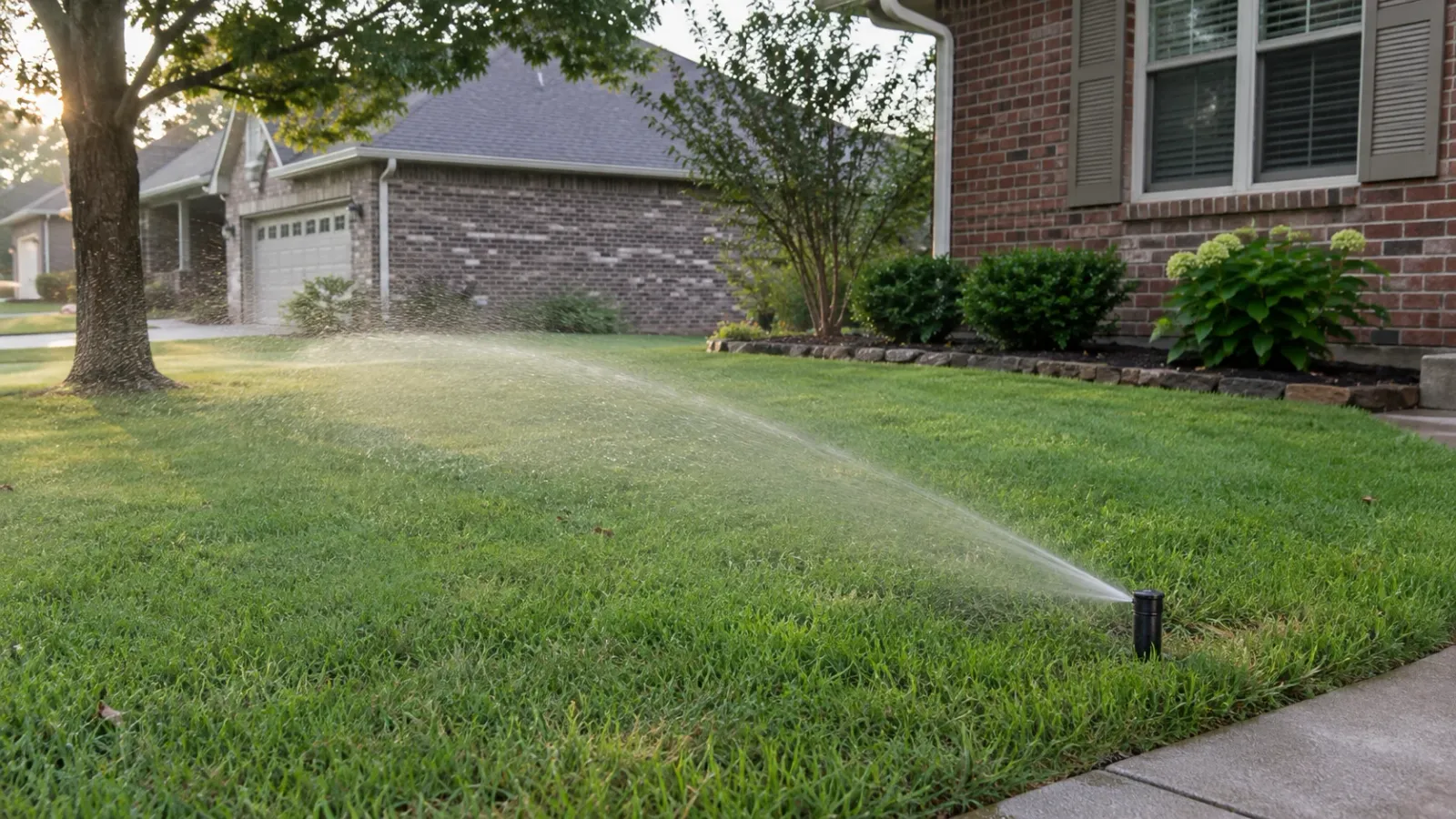
Start the sprinkler system
If you drained the system in fall (our winter yard prep checklist covers that), bring it back slowly. Rain Bird's spring start-up steps:
- Wait for thawed ground. Rain Bird says the soil should be frost-free at least 12 inches deep. Starting a system in frozen ground can burst pipes.
- Check the backflow preventer for cracks or freeze damage, and make sure the drain plug is tight.
- Clear the heads. Trim grass and dirt away so each head pops up freely, and replace cracked parts.
- Set the controller's date and time, then switch it to manual to test.
- Open the main valve slowly. Opening it fast causes a pressure surge called water hammer that can damage pipes and valves.
- Run each zone and look for dead heads, leaks, misting and dry spots. Rain Bird says systems run best between 45 and 75 PSI.
- Set the spring schedule last, and adjust it as the weather warms.
OSU's schedule adds that an irrigation checkup in May can cut outdoor water use by finding problems early.
Scalp the Bermuda, if you want to
Cutting Bermuda short once in early spring removes last year's brown blades and helps it green faster. It's optional. Our guide on when to cut Bermuda grass short after winter covers the timing, the height and why you should bag the clippings. OSU's schedule also lists March for removing excessive thatch from warm-season lawns.
Divide perennials and grasses
OSU's March list includes dividing and replanting summer- and fall-blooming perennials. Its ornamental grass fact sheet says most grasses benefit from spring division, especially big clumps that have died out in the center.
Refresh the mulch
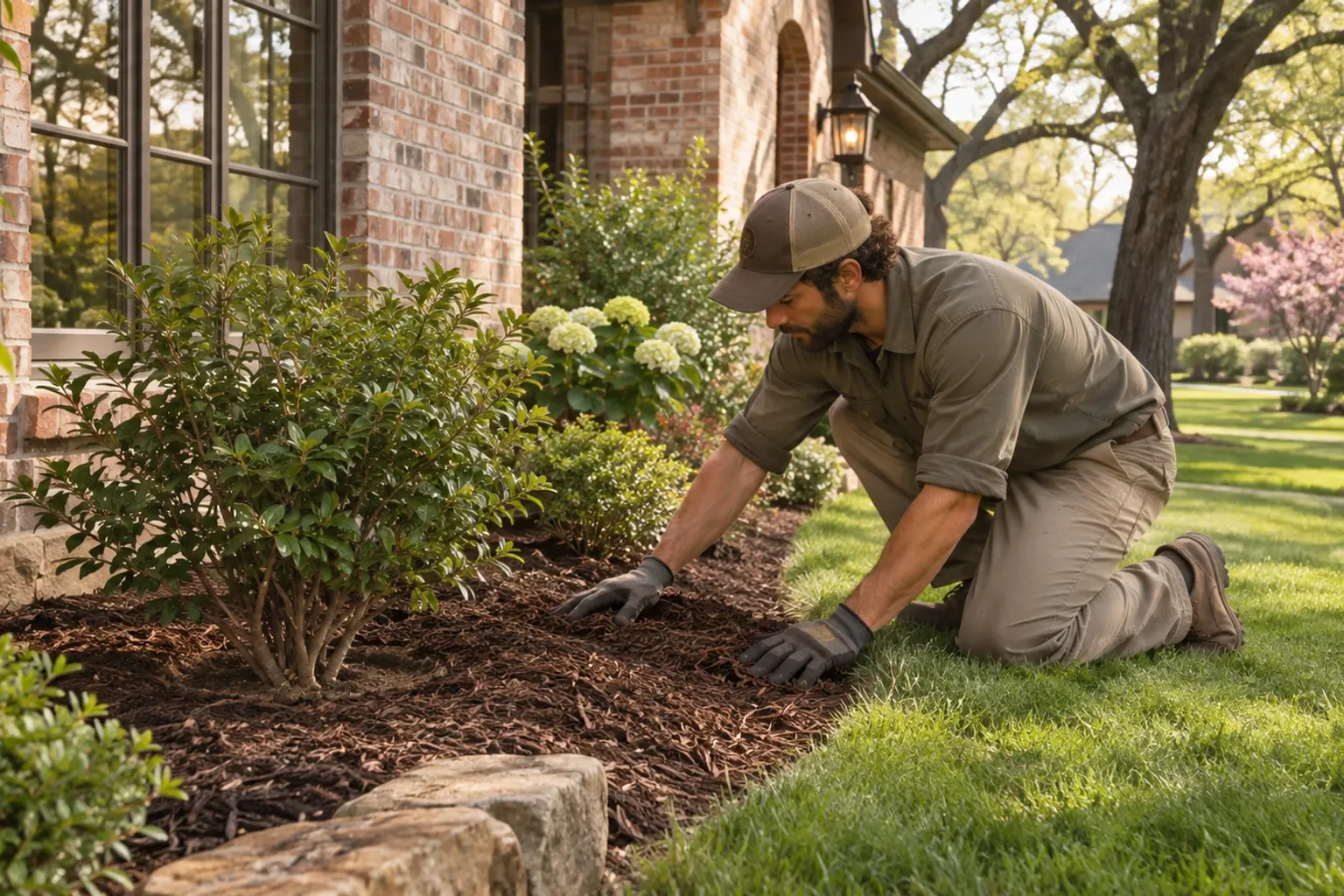
OSU's schedule lists March for mulching beds to control weeds. University of Illinois Extension recommends 2 to 4 inches of mulch: 2 to 3 inches for fine or composted material, 3 to 4 inches for coarse chips and bark. Keep it at least 4 inches from tree trunks, and add only where the old layer has thinned. Our mulch guide covers which kind to use.
Round 3: late April into May
- Cut out winter damage. OSU's schedule says to remove winter-damaged branches, and plants that haven't started growing by late April.
- Check the lawn for winterkill. OSU's March tips say that by mid-May, large tan or brown patches of Bermuda or zoysia with no green shoots point to poor recovery, and those areas generally need renovation.
- Feed the Bermuda in May, not March. OSU's April 2026 tips say to hold off fertilizing warm-season grass until early May, when the turf is fully green and actively growing. Test the soil first if it's been a couple of years.
- Plant summer color. OSU says most bedding plants, summer bulbs and annual seeds go in after the danger of frost has passed. Let daffodil and tulip foliage stay as long as possible before you remove it.
- Second preemergent. OSU's schedule puts the second application on turf in mid-May or early June.
Getting rid of the debris in Tulsa
The City of Tulsa takes yard waste with the regular trash. Bagged yard waste can go in the gray trash cart if the lid closes; the blue recycling cart is not for yard waste. Extra yard waste goes to the curb in transparent bags, and branches in bundles no more than 2 feet across and 5 feet long. Each bag or bundle must weigh under 40 pounds, and a household can set out 15 bags and bundles in total on its collection day.
For a big spring cleanup, the city's Mulch Site at 2100 N. 145th E. Ave. takes green waste free. Its posted hours are 7:30 a.m. to 4:30 p.m., closed Wednesdays. These are the City of Tulsa's rules. In Jenks, Bixby, Glenpool, Sapulpa or Sand Springs, check your own city's trash service before you fill the curb.
Common questions
When should I start spring yard cleanup in Tulsa?
Late February or early March. That's when OSU Extension's schedule has you finishing tree and hedge pruning, cutting back ornamental grasses and getting crabgrass preemergent down before mid-March. Save the frost-sensitive jobs for after the March 29 average last frost.
When should I cut back ornamental grasses in Oklahoma?
In late winter or early spring, just before new growth starts. OSU Extension says to cut small grasses to about 2 to 3 inches and large ones to 6 to 8 inches. Mexican feather grass only needs a third to half of its height removed.
Should I prune my shrubs in spring?
Only some of them. OSU Extension says to prune summer bloomers like rose-of-Sharon and butterfly bush in early spring, but to leave spring bloomers like forsythia and viburnum until after they flower, or you'll cut off the buds.
When can I turn my sprinklers back on?
After the ground has thawed. Rain Bird says the soil should be frost-free at least 12 inches deep. Open the main valve slowly to avoid a pressure surge, then test each zone in manual mode before you set a schedule.
When should I fertilize Bermuda grass in spring?
Early May. OSU Extension says to wait until the turf is fully green and actively growing, even if it shows some green in April.
Help with the spring list
Our lawn care plans cover mowing, edging, bed care, mulch and seasonal cleanup in Jenks, Bixby, Glenpool, Sand Springs and Sapulpa, and you can book a single seasonal cleanup without a plan. Send us a few photos of the yard and we'll put the work and the price in writing.
Sources: National Weather Service Tulsa, frost and freeze climatology · Oklahoma State University Extension, Landscape Maintenance Schedule (HLA-6408) · Oklahoma State University Extension, March 2025 Hort Tips · Oklahoma State University Extension, Ornamental Grasses and Grass-Like Plants for Oklahoma · Oklahoma State University Extension, Spring landscape cleanup begins with smart pruning (2026) · Oklahoma State University Extension, Early to Mid April 2026 Hort Tips · Rain Bird, Is your sprinkler system ready for spring? · University of Illinois Extension, Proper mulching techniques (PDF) · City of Tulsa, Greenwaste pick up · City of Tulsa, Greenwaste disposal options (July 2026)