HOA common-area maintenance: what to put in the contract
Name every area, give each task a frequency and a standard you can check, and set reports, a fix-it window, payment terms and how either side can cancel.
· Tulsa, Jenks, Bixby, Glenpool, Sapulpa, Sand Springs
The short answer
An HOA grounds contract should name every area the crew maintains, list the work for each area with a frequency and a standard anyone can check, and say who pays, how much and when. It should also set how the crew reports, how long it has to fix missed work, and how either side can cancel.
North Carolina State Extension's guide to turf contracts puts the rule plainly: "Try to avoid statements that are vague, because they can lead to disputes." "Keep the entrance looking nice" can't be measured. "Mow weekly at 2 inches, edge every mowing, blow clippings off the walks the same day" can.
Start with what the association owns
In Oklahoma, the Real Estate Development Act lets an owners association form to provide "management, maintenance, preservation and control of commonly owned areas." The recorded instrument that creates it has to spell out the members' obligations. Read your declaration before you ask for bids, so the contract covers what the association is responsible for and nothing it isn't.
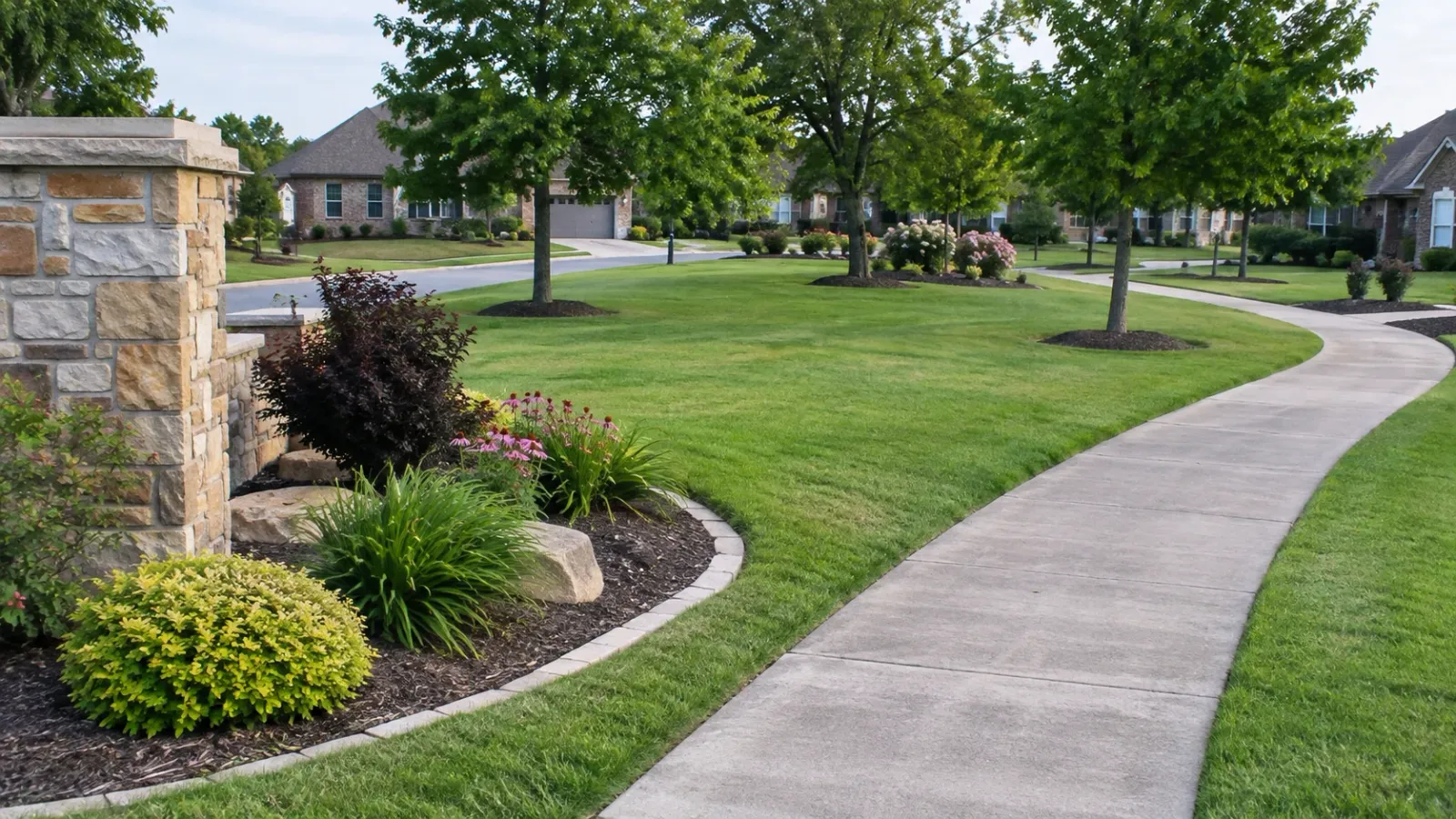
Then build a site map. NC State says the contract should state the work location, the address and the specific areas, with drawings if they help. Break the property into the broad areas the guide lists: turf, shrubs, hedges, flower beds, trees and paved areas. Each one gets its own list of tasks. A bidder can't price an entry bed that isn't on the map, and a crew can't be held to it either.
Write standards you can check
NC State recommends finding "objective, measurable standards by which the performance can be judged." For each area, that means:
- Mowing: frequency, cutting height, what happens to clippings, mower type and blade sharpness. For Bermuda, Oklahoma State University's lawn calendar lists cutting heights of 1.5 to 2.5 inches for medium to low maintenance and 1 to 1.5 inches for high maintenance, and says to remove no more than a third of the leaf blade at one time. Pick the regime that matches the budget and write the height in.
- Weeds: how often beds are weeded, or the most weeds allowed in a given area, or the size a weed can reach before it comes out.
- Hedges: how often they're sheared, or how much growth is allowed above the set height before pruning.
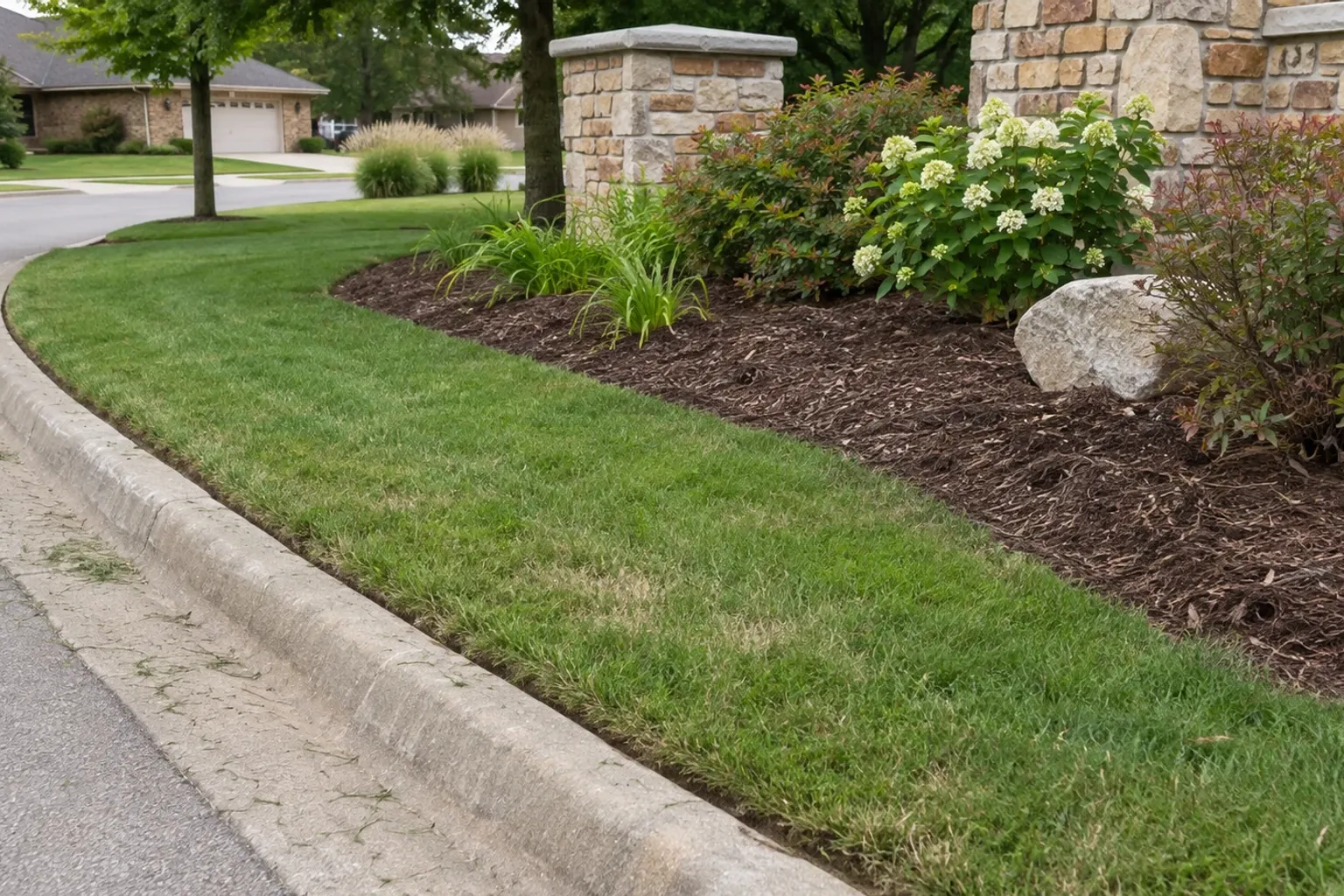
- Mulch: write a depth, not just "mulch the beds." The EPA's sample HOA contract language adds about 3 inches a year to beds and around trees. Our mulch guide explains why the layer should stay 2 to 4 inches deep and 4 to 6 inches off trunks, so measure before each top-up.
- Trees: name the ANSI A300 Part 1 pruning standard. Its advisory notice lists topping as an unacceptable practice, and OSU Extension warns that topping "permanently ruins the structural integrity of the tree."
Specifications on their own aren't binding, NC State notes, but written into the contract they are. The same list lets the board compare bids line by line.
Treatments need the right state license
Fertilizer and weed-control spraying is often a separate scope from mowing. Under Oklahoma law it is unlawful to apply pesticides for hire without an applicator's license from the State Board of Agriculture for that category of work. The Department of Agriculture's application form lists lawns and landscape plants as category 3A, Ornamental and Turf, Outdoor. Ask for the license number of whoever sprays the common areas and put it in the contract.
NC State also suggests a prohibited-practices clause, such as banning certain chemicals or mechanical edgers near shrub and flower beds.
Irrigation is its own section
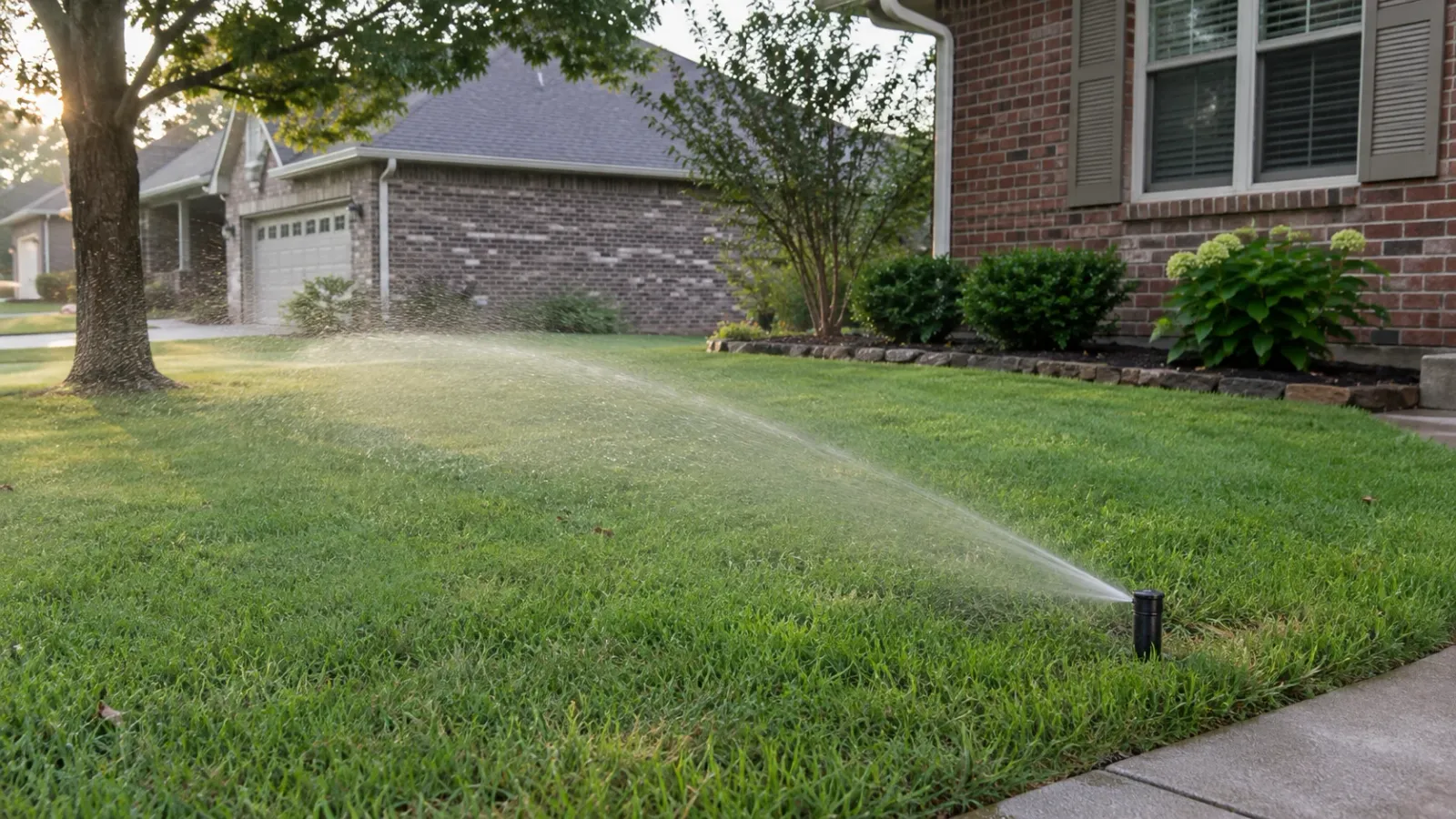
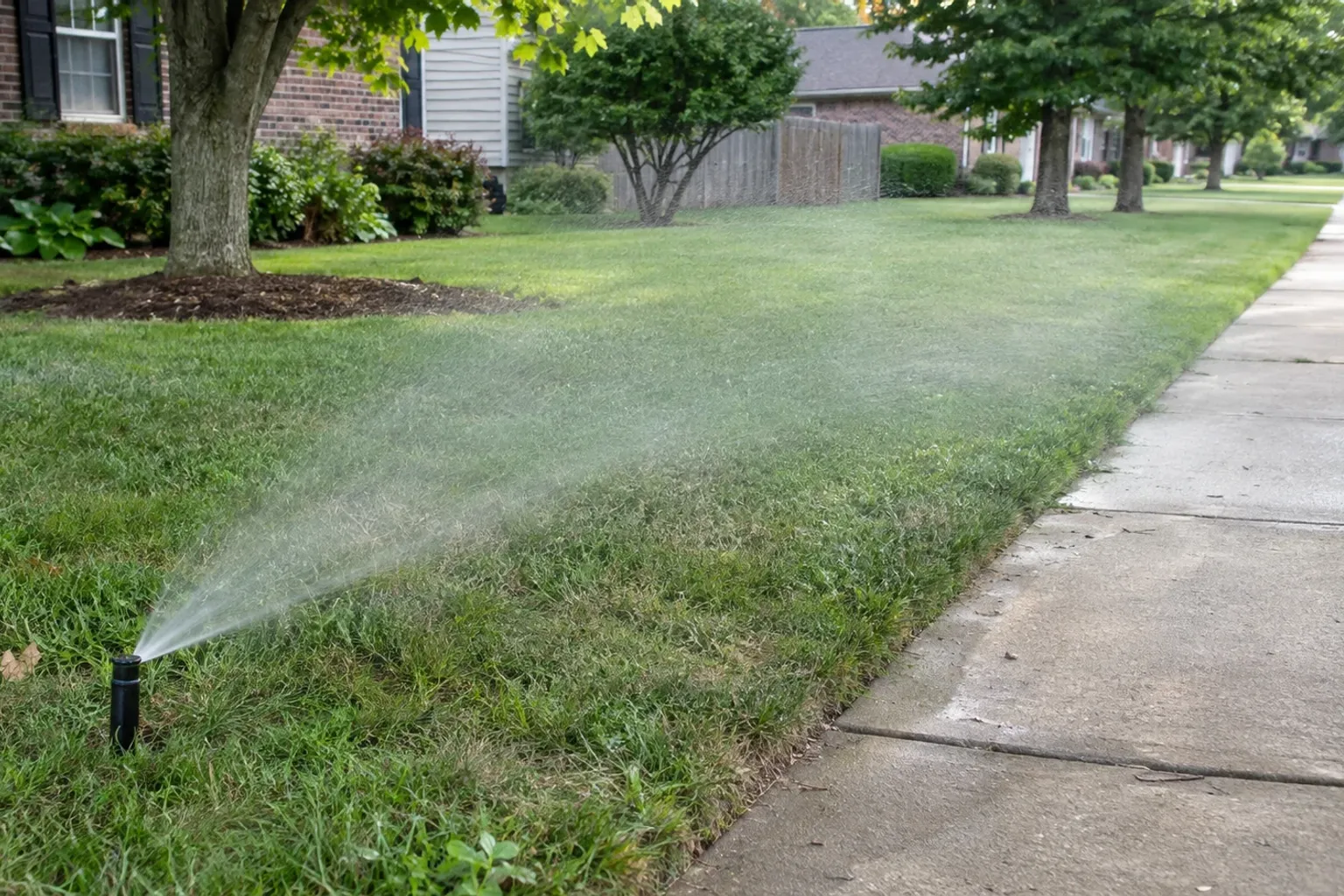
Sprinklers on common ground run on the association's water bill, so spell out who checks them and who pays for repairs and damage. The EPA's WaterSense program publishes sample HOA contract language that boards can borrow:
- A start-up and mid-season check: system pressure, typically 30 to 45 psi depending on the emitter type, heads adjusted so they don't spray pavement, and sensors tested.
- A diagram that at least shows the shut-off valves.
- A monthly walk-through while the system runs during watering season, with a monthly report to the HOA on weather, water use and maintenance done.
- Clock-based controllers adjusted at least every two weeks, and water meters read at least every two weeks to catch leaks.
- Watering between 10 p.m. and 6 a.m., and cycle-and-soak schedules on clay soil or slopes to stop runoff.
Reports, a fix-it window and a way out
University of Florida Extension's guide for community associations says the contract should name one person who talks to the contractor, so the crew isn't taking orders from every resident. It should also set a schedule for written reports covering work completed, work planned, any changes from the specifications and problems found.
NC State's checklist adds the clauses that matter when things go wrong:
- Performance: what happens when work is late or unacceptable, including penalties.
- Exclusions: limits for vandalism, theft and severe weather.
- Subcontracting: only with the association's written permission.
- Insurance: workers' compensation and liability coverage.
- Cancellation: who can cancel, and how much notice is required.
UF adds that the contract should state how much time the contractor has to correct serious problems before termination, and that the association's attorney should write or review the termination language. NC State says the same about legal advice in general.
Comparing bids
UF recommends getting at least three bids, walking the property with each bidder and recording what you agreed on. It also notes the lowest price is not always the best value. If every bidder prices the same written scope, the numbers mean something. If each one writes their own, you're comparing three different contracts.
Common questions
What should an HOA landscape contract include?
The areas covered, the tasks and frequency for each, measurable standards, payment terms, who the contractor reports to, a performance clause, exclusions for vandalism and severe weather, insurance, subcontracting rules and cancellation terms with notice periods.
How do you hold a landscaper to a standard?
Write standards a board member can check on a walk: a mowing height, a weeding frequency, a hedge height, a mulch depth. NC State Extension says vague wording leads to disputes, and measurable standards settle them.
Does the mowing crew need a license to spray weeds in Oklahoma?
Yes, if they're spraying for pay. Oklahoma law requires a State Board of Agriculture applicator's license for the category of work, and lawns and landscape plants fall under category 3A, Ornamental and Turf, Outdoor. Ask for the license number.
How many bids should an HOA get for grounds maintenance?
University of Florida Extension recommends at least three, each priced against the same written scope after a walk of the property with the bidder.
Who should review the HOA's landscape contract?
The association's attorney, especially the termination and cancellation terms. Both NC State and University of Florida Extension recommend legal review.
Getting a grounds quote
We maintain HOA and shared grounds as their own scope: common lawns, entries and shared planting beds. Send us the areas to maintain and the schedule you have in mind, and we'll prepare a quote for your property. Request a grounds maintenance quote.
Sources: NC State Extension, Tips on Writing Turf Contracts and Landscape Specifications (AG-679) · U.S. EPA WaterSense, Sample Landscape and Irrigation Contract Language for HOAs (PDF) · UF/IFAS Extension, Florida-Friendly Landscaping Guidelines for Community Associations (ENH1080) · Oklahoma Statutes Title 60, §60-852 Owners association (PDF) · Oklahoma State University Extension, Bermudagrass Lawn Management Calendar (L-441) · Oklahoma Statutes Title 2, §2-3-82 license requirements · Oklahoma Department of Agriculture, Pesticide License Application (PDF) · Tree Care Industry Association, ANSI A300 Part 1 Pruning · OSU Extension, Managing Storm-Damaged Trees