How to compare two landscaping quotes
Make both quotes price the same written scope, then compare materials, quantities, what's excluded, the schedule and the payment terms before the total.
· Tulsa, Jenks, Bixby, Glenpool, Sapulpa, Sand Springs
The short answer
Compare two landscaping quotes line by line, not by the bottom number. Check that both price the same scope, then compare the materials and quantities, what each one leaves out, the start and finish dates, and the payment schedule. If one total is far higher or lower, the FTC's advice is to ask the contractor to explain the difference rather than take the lowest bid.
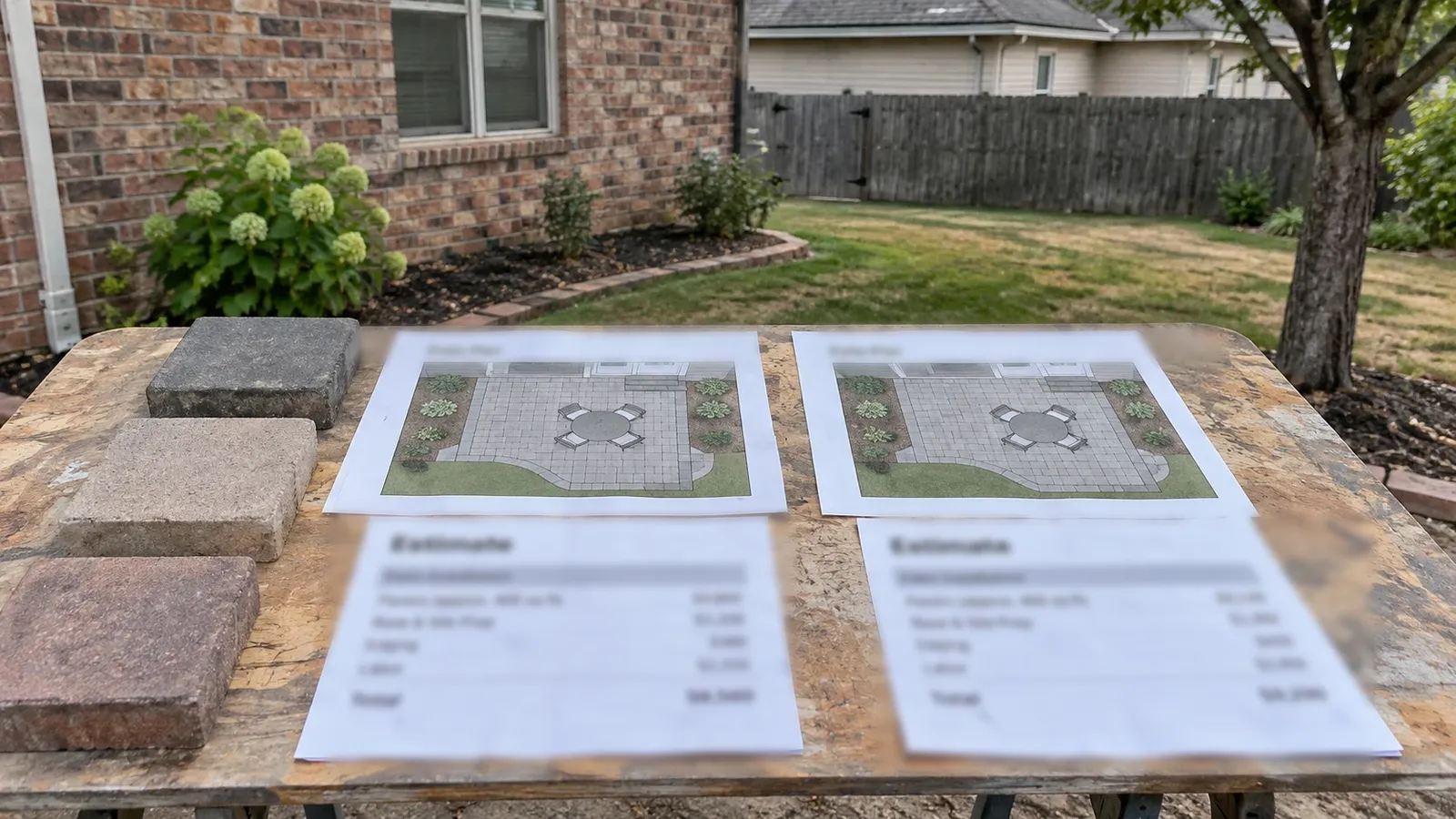
Most gaps between two quotes come from different jobs, not different prices for the same job. One includes hauling off the old patio and the other doesn't. One digs a deeper base. One counts ten shrubs and the other counts six. Line them up and the real difference usually shows.
Get both quotes for the same job
Quotes only compare when they price the same work. Mississippi State University Extension suggests writing a list of every item you want done before you call anyone, and handing each contractor a copy of your property plat so everyone measures the same areas. For upkeep, say which areas get which work and how often.
University of Arizona Extension says the contractor should take measurements and always send the estimate in writing. A number given over the phone after a glance at photos isn't a quote you can hold anyone to.
How many? NC State Extension suggests estimates from 3 or 4 landscapers. University of Wisconsin Extension says to talk with at least three. Two good quotes on the same scope still beat four on different ones.
Line them up item by item
Put the quotes side by side and check each of these. Arizona, Wisconsin and the FTC all list most of them as what a written estimate or contract should contain.
| Item | What to compare |
|---|---|
| Scope | Every area and task named, not "landscape front yard" |
| Materials | Type, quantity and quality: paver line, block, stone size, mulch type |
| Plants | Species, sizes, count and price of each |
| Units | Square feet of patio, linear or face feet of wall, cubic yards of mulch or rock |
| Total | Including tax, and how far the final bill can move from the estimate |
| Schedule | A start date and a completion date |
| Changes | How extra work gets priced and approved |
| Warranty | What it covers for workmanship and for plants, and for how long |
Units matter more than they look. A cubic yard is 27 cubic feet, so one yard of mulch covers about 108 square feet at 3 inches deep. If one quote says 6 yards and the other says 10 for the same beds, they're planning different depths or measuring different areas.
Compare what's under the surface
On patios and walls, the work you never see is where quotes differ most.
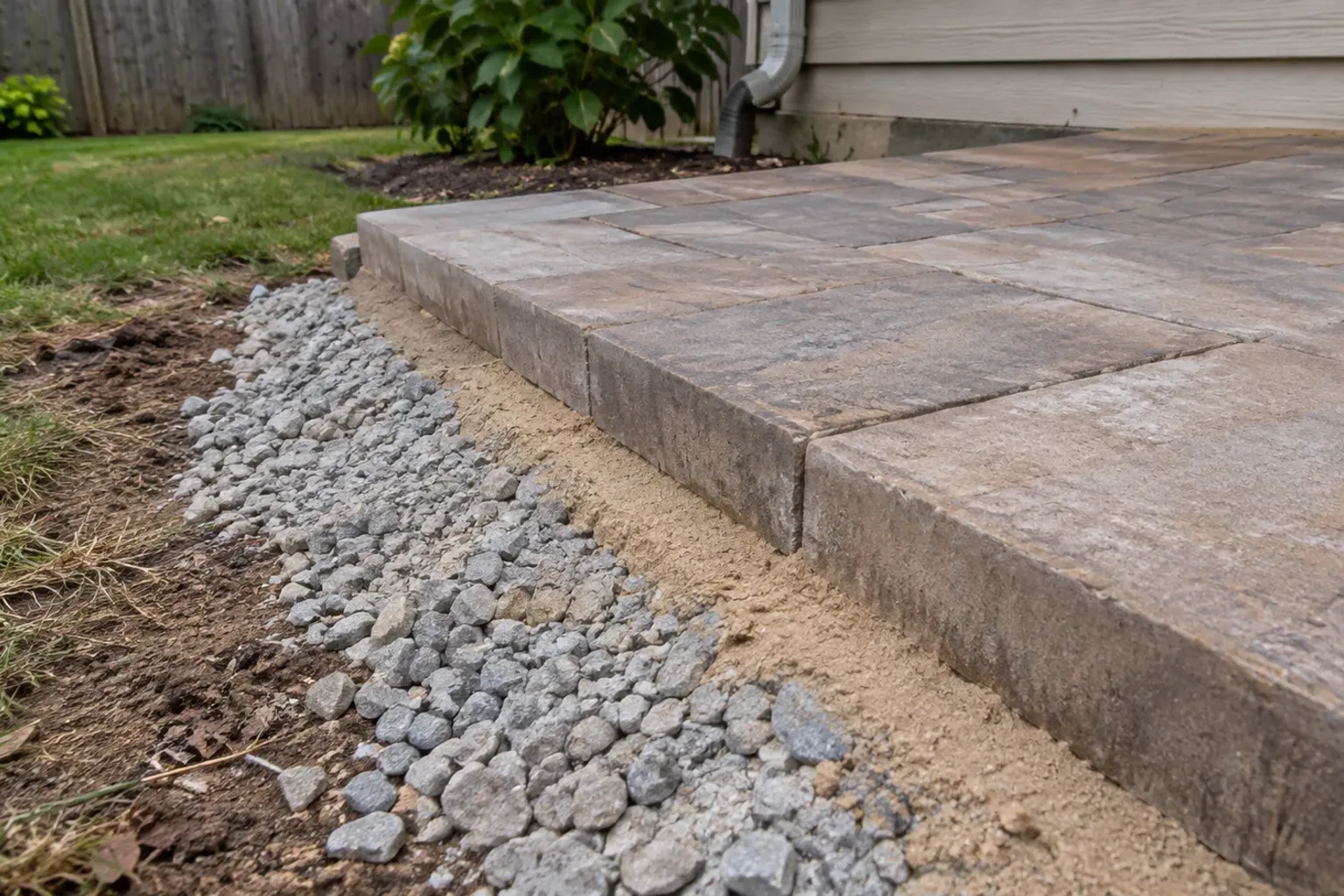
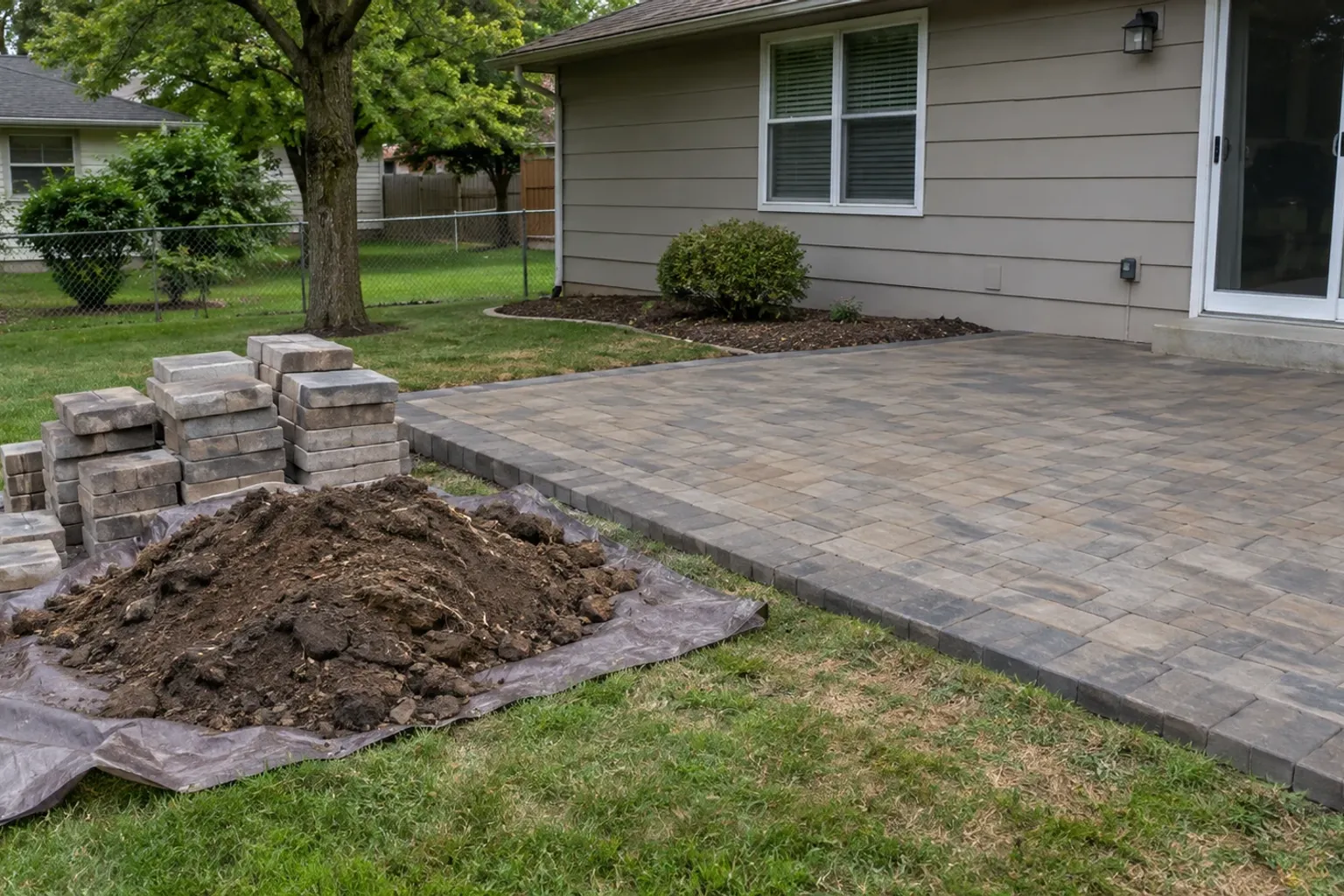
For a paver patio, the Concrete Masonry & Hardscapes Association calls for at least 4 inches of compacted base on well-drained soil, and thicker bases on wet or weak soil. It lists geotextile fabric as an option over clay, edge restraints to hold the pavers in, and about 1 inch of bedding sand. Ask each contractor how deep the base will be and whether fabric is included. More on this in our paver patio cost guide.
For a block retaining wall, Allan Block's installation guide buries part of the first course, with a trench 6 inches deep plus 1 inch for each foot of wall height. It fills 12 inches behind the block with wall rock and requires a drain pipe for any reinforced wall, any gravity wall over 4 feet and any site with poor drainage. A wall quote with no wall rock or drain line is a cheaper wall, not a cheaper price for the same one.
Height also changes the paperwork. In the City of Tulsa, a retaining wall over 4 feet, measured from the bottom of the footing, needs a building permit and a design sealed by an engineer. See our retaining wall permit guide for the other towns.
Read what each quote leaves out
Exclusions are where a low number often hides. Check who handles:
- Permits. Arizona Extension lists "who is responsible for obtaining the required permits" as a question to ask.
- Utility locates. OKIE811 says that when you hire a contractor, it's the contractor's job to contact 811 at least three business days before digging. Ask for the locate ticket number.
- Removal and haul-off of old pavers, sod, rock or soil.
- Cleanup, sprinkler repairs if lines get cut, and lawn repair where equipment drove.
- Subcontractors. Ask whether the company's own crew does the work.
Payment terms and the fine print
The FTC says not to pay the full amount up front, and not to make the final payment until the work is done and you're satisfied. It lists asking for everything up front, or taking cash only, as signs of a scam. Your contract should list the contractor's name, address, phone and license number, the start and completion dates, and a written statement of your right to cancel. Fill in every blank before you sign.
If you sign at home, the FTC's Cooling-Off Rule generally gives you until midnight of the third business day to cancel a sale of $25 or more, and the seller must give you a cancellation form. There are exceptions, such as a real emergency where you waive the right in writing.
In Oklahoma, unpaid suppliers can come after the house. State law gives a lien to anyone who supplies labor or material for improvements on the land, including planting trees and shrubs or building fences and walks, and that covers subcontractors and suppliers working through your contractor. On a home you live in, such a lien isn't valid unless the supplier sent you a pre-lien notice within 75 days of its last delivery. If one arrives, talk to your contractor before you pay again.
Common questions
How many landscaping quotes should I get?
Three is a common target. NC State Extension suggests 3 or 4 estimates and University of Wisconsin Extension suggests talking with at least three contractors. Make sure each one prices the same written list of work.
Should I take the lowest landscaping quote?
Not automatically. The FTC, NC State and Wisconsin Extension all advise against picking the lowest bid on price alone. Ask the low bidder what's different, then check the materials, quantities and exclusions.
Why are two landscaping quotes so different?
Usually they price different work: a deeper base, more plants, removal and haul-off, a drain line, or permits. Compare quantities in the same units, such as square feet and cubic yards, to find the gap.
What should a landscaping contract include?
The scope of work, materials by type and quantity, the total cost and payment schedule, start and finish dates, who handles permits and cleanup, how changes are priced, and the warranty. The FTC adds the contractor's license number and a written right to cancel.
Getting a quote from us
Every job we do starts with a written quote listing the work, what's included and excluded, and the price. For patios, walls and drainage, it explains the work, materials and choices before you decide to go ahead. For lawn and landscape care, it confirms visit frequency, areas covered, material quantities and the total before work starts. See our patio and wall work or tell us about your project and compare ours line by line.
Sources: University of Wisconsin Extension, Hiring a Landscape Professional: A Homeowner's Guide for Wisconsin (September 3, 2026) · University of Arizona Cooperative Extension, How to Hire a Landscaper (PDF, October 2024) · NC State Extension, Choosing a Landscape Contractor · Mississippi State University Extension, Working With a Landscape Contractor · Federal Trade Commission, How To Avoid a Home Improvement Scam · eCFR, 16 CFR Part 429: Cooling-Off Period for Sales Made at Homes · Oklahoma Statutes Title 42, Liens, §§141, 142.6 and 143 (PDF) · Concrete Masonry & Hardscapes Association, PAV-TEC-002: Construction of Interlocking Concrete Pavements · Allan Block, Basic Installation · City of Tulsa, Residential Building Guidelines (PDF, January 2025) · OKIE811, Homeowners