
When does Bermuda grass go dormant in Oklahoma?
Bermuda goes dormant after fall's first frosts, which average November 3 to 14 in Tulsa, and greens up once 4-inch soil reaches 65°F in spring.
· Tulsa, Jenks, Bixby, Glenpool, Sapulpa, Sand Springs
The short answer
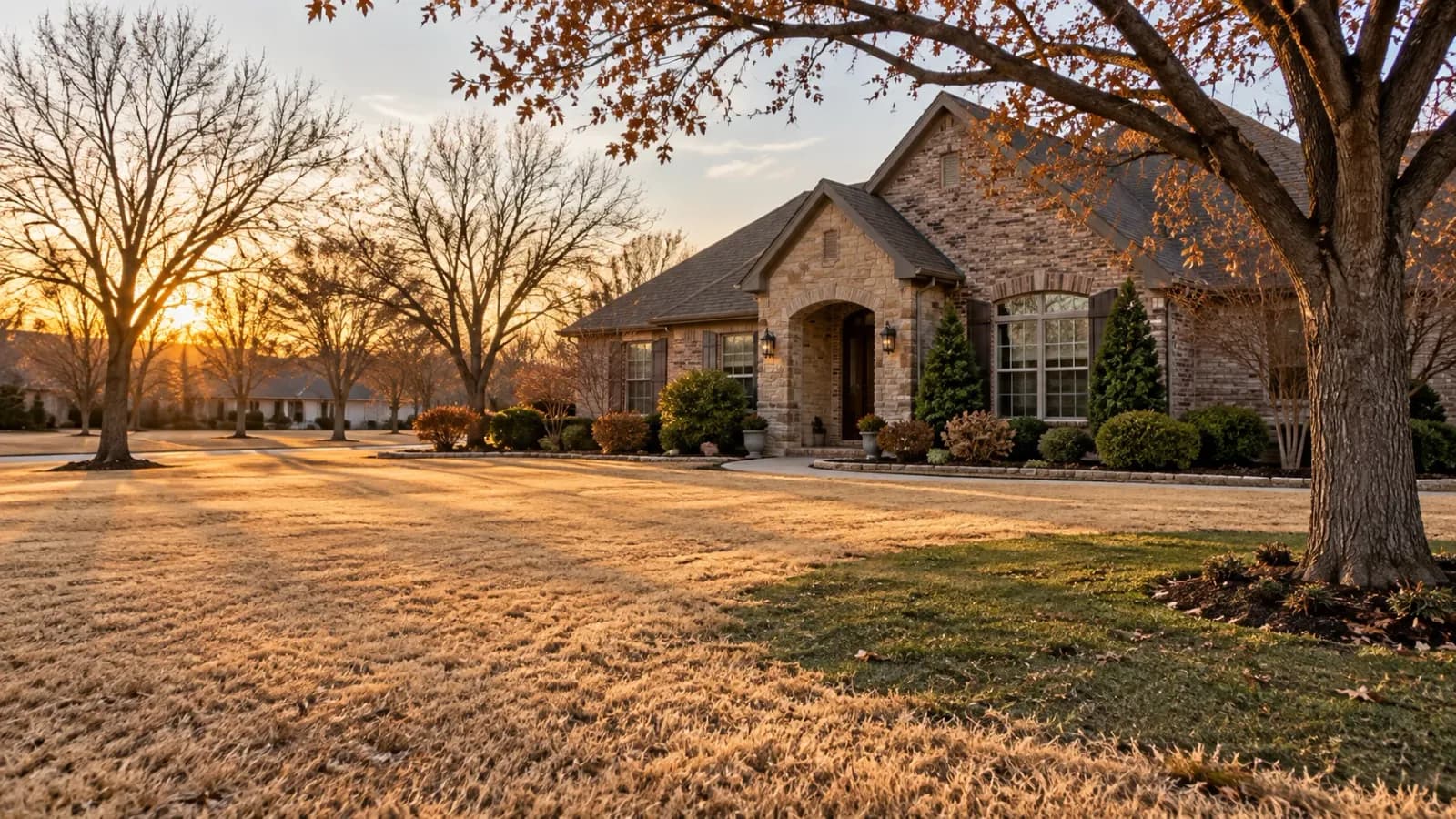
Bermuda grass goes dormant after the first frosts of fall. Around Tulsa, the National Weather Service puts the average first 32-degree night on November 3 and the average first 28-degree hard freeze on November 14, so most Bermuda lawns are tan by mid-November. They stay that way until the soil warms to about 65°F in spring.
Growth slows before the color changes. Mississippi State University's extension service says Bermuda stops growing new shoots once days get shorter and temperatures fall below 50°F. At that point the grass starts moving sugars and nutrients down into its underground stems for winter. The brown leaves after frost are the last step, not the first.
What dormancy is
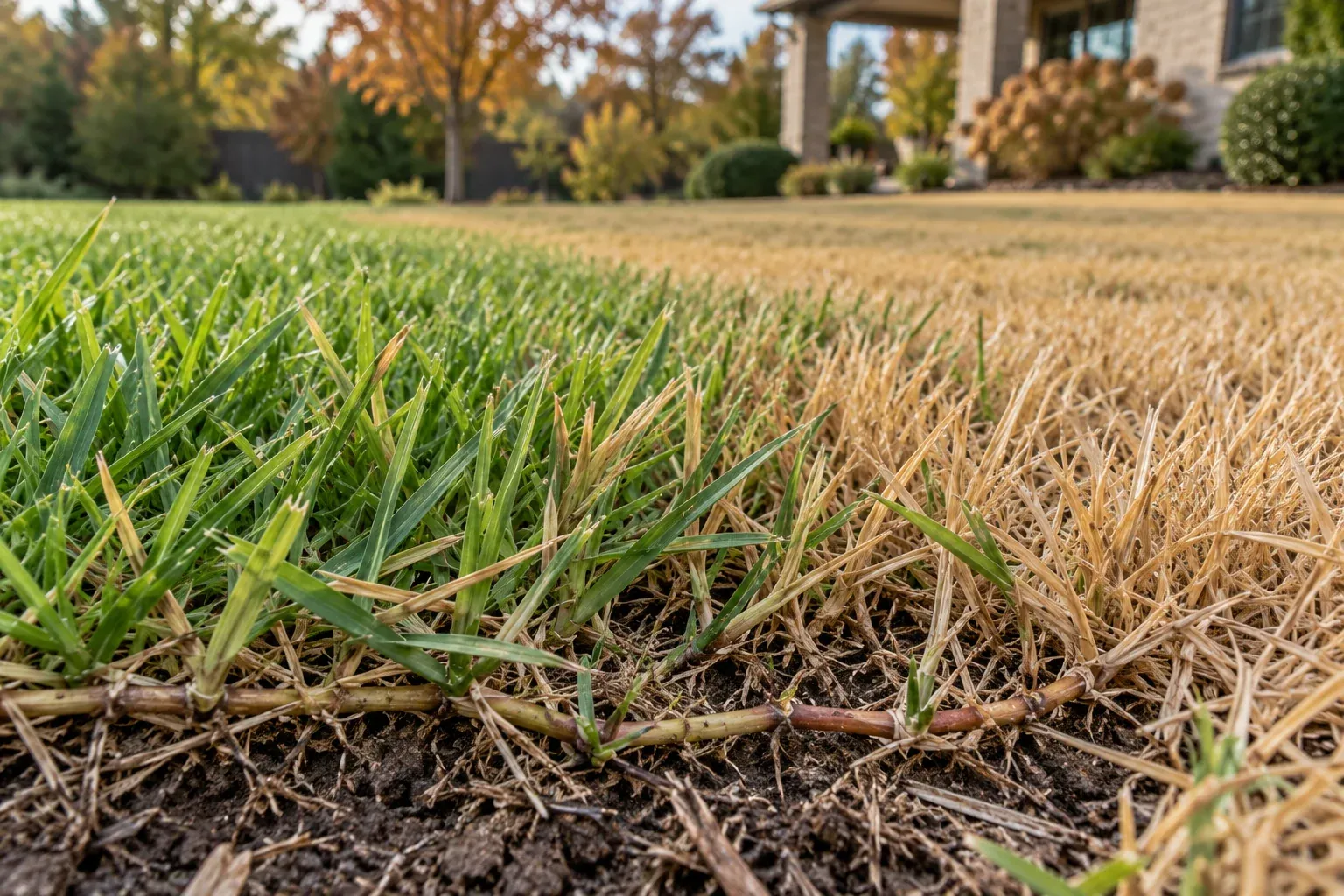
A dormant Bermuda lawn is alive. The leaf blades die back, but the runners above and below ground (stolons and rhizomes) and the roots hold the plant's reserves through winter. That's why a lawn that looks dead in January can be thick and green by June.
Oklahoma State University's lawn grass fact sheet calls Bermuda the best-adapted grass for full-sun Oklahoma yards: it handles summer heat and drought and has enough winter hardiness for the state. The brown season is the trade.
Why the date moves from year to year
Tulsa's frost records go back to 1906, and one fall can look nothing like the next:
- Earliest first 32-degree night on record: October 7, 2012
- Latest first 32-degree night on record: November 28, 1990
- Average first 24-degree killing freeze: November 26
Cold air settles in low ground first. A yard at the bottom of a slope or in an open lot can frost a few nights before one sheltered by houses and trees, so neighbors can go brown in different weeks.
Getting a Bermuda lawn ready
Stop the nitrogen early
Mississippi State advises against feeding nitrogen to Bermuda in the 30 to 45 days before frost. Late nitrogen pushes soft new growth that winter kills more easily, and it drains the reserves the grass is trying to store. Counting back from Tulsa's November 3 average frost, that puts the last nitrogen feeding between about September 19 and October 4.
The same source says potassium helps Bermuda survive winter, and links most winterkill to poor fertility: low pH, low potassium and low phosphorus. A soil test tells you which, if any, your lawn is short on.
Raise the mower, then park it
The University of Tennessee's lawn calendar raises Bermuda's mowing height by at least half an inch in October to prepare for dormancy and stops mowing after frost. Our guide on when to stop mowing covers the last few cuts.
Deal with wet spots
Mississippi State lists standing water as a winter danger: when temperatures drop fast, water around the grass crowns can freeze and rupture the plant's cells. If your lawn holds puddles after rain, see why water pools in a yard.
Through the winter
Winter weeds show up against tan Bermuda. Oklahoma State's weed control fact sheet says winter annual weeds such as henbit and chickweed sprout in late September and October, and they stay green while the lawn is brown. Some weed killers are labeled only for fully dormant Bermuda. Tennessee's calendar says to apply a non-selective herbicide only when the Bermuda is completely dormant and the air is above 55°F. Read the label every time.
If you want a green lawn all winter, Oklahoma State notes that perennial ryegrass is commonly seeded into established Bermuda for green cover from October through April. Annual ryegrass costs less but gives a lower-quality winter lawn. Mississippi State warns against feeding the ryegrass until the Bermuda underneath has gone dormant, or the nitrogen keeps the Bermuda growing into the cold.
When Bermuda wakes up
The University of Georgia's extension service says warm-season grass green-up depends on soil temperature reaching 65°F, measured 4 inches deep. The Oklahoma Mesonet posts a 3-day average 4-inch soil temperature map for its stations across the state, updated each morning between 7 and 8, so you can check the reading nearest you instead of guessing.
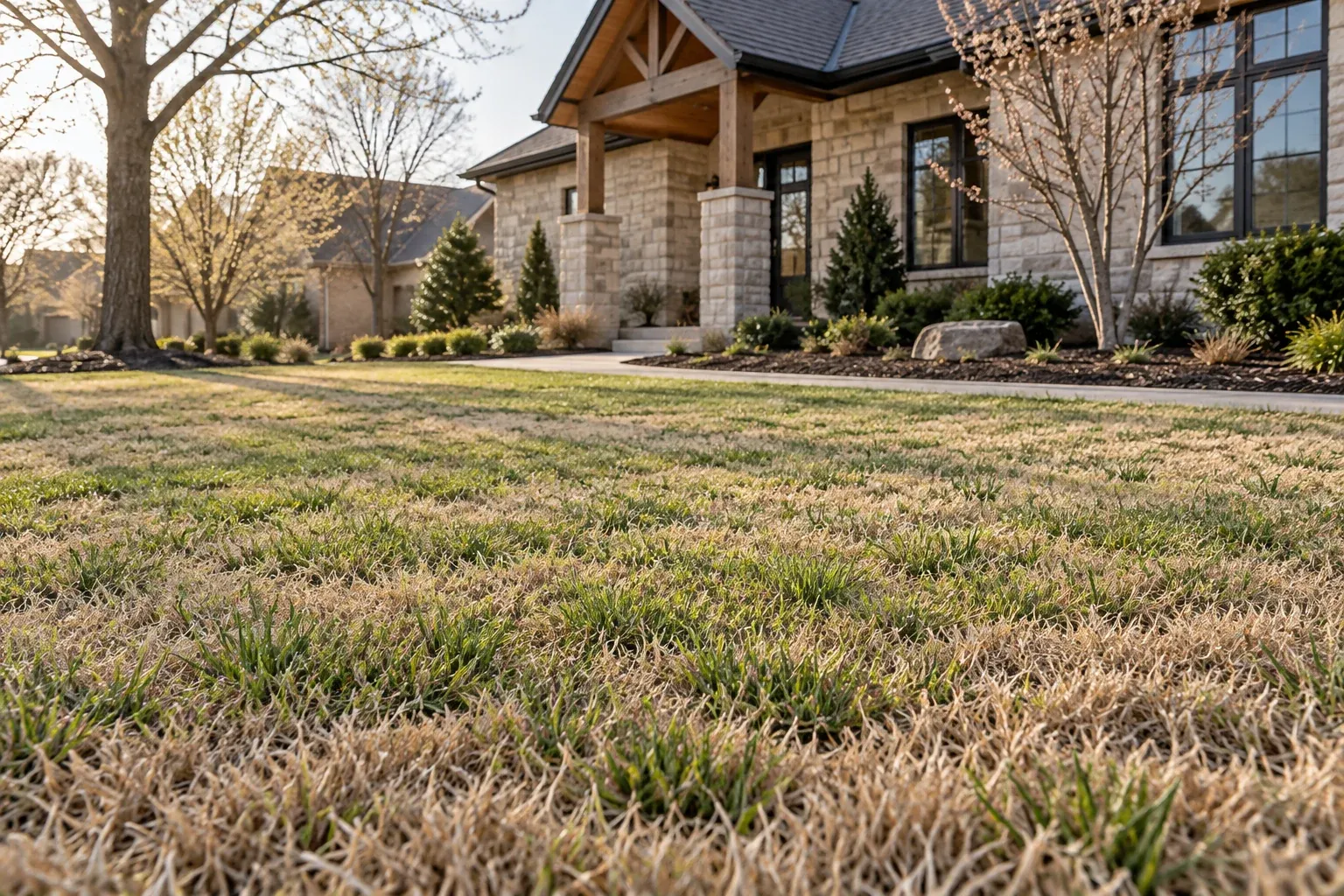
The calendar helps less. Tulsa's average last 32-degree night is March 29 and the average last 28-degree hard freeze is March 17, but a 32-degree night has come as late as May 2 (1909). Mississippi State calls early spring one of the riskiest times for Bermuda: a mild, wet March starts green-up, then a freeze hits new growth that can't handle cold.
A slow lawn is often just slow. In one spring report, Georgia's extension service found that lawns people feared were winterkilled more likely hadn't finished greening up, and that full green-up may wait until daytime highs sit in the 80s. Tennessee suggests mowing in April and bagging the clippings to clear dead leaf, which lets the soil warm and speeds green-up.
Common questions
What temperature does Bermuda grass go dormant?
Mississippi State says Bermuda stops growing new shoots when days shorten and temperatures fall below 50°F. The leaves turn tan after frost. In Tulsa, the average first frost is November 3 and the average first hard freeze is November 14.
Is my Bermuda grass dead or dormant?
If it browned after a fall frost, it is dormant. The roots and underground stems stay alive through winter. In spring, give it until the soil passes 65°F at 4 inches and the rest of the neighborhood has greened before you decide a patch has died.
When does Bermuda grass turn green again in Oklahoma?
When the soil 4 inches down reaches about 65°F. The Oklahoma Mesonet's daily soil temperature maps show when that happens near you. Full color can take until daytime highs reach the 80s.
Should I fertilize Bermuda grass in the fall?
Not with nitrogen in the last 30 to 45 days before frost. Around Tulsa, that means the last feeding goes down by about September 19 to October 4. Potassium supports winter hardiness, and a soil test shows whether your lawn needs it.
Can I keep Bermuda grass green all winter?
Yes, by overseeding with ryegrass. Oklahoma State says perennial ryegrass gives green cover from October through April. Kansas State notes the ryegrass also competes with the Bermuda when it tries to come back in spring.
Help with the lawn
Our lawn care plans cover mowing, edging, bed care, mulch and seasonal cleanup in Jenks, Bixby, Glenpool, Sand Springs and Sapulpa. Send us a few photos and we'll put the work and the price in writing.
Sources: National Weather Service Tulsa, frost and freeze climatology · Mississippi State University Extension, Impact of Cold Temperatures on Warm-season Perennial Grasses (Forage News, December 2015) · Oklahoma State University Extension, Selecting a Lawn Grass for Oklahoma (HLA-6418) · Oklahoma State University Extension, Controlling Weeds in Home Lawns (HLA-6421) · University of Tennessee Extension, 2024 Lawn Calendar (PB 1903) · University of Georgia Extension, Turf green-up in process, takes time · Oklahoma Mesonet, 3-day average 4-inch soil temperature · Kansas State University, Bermudagrass Green Up in March?